South Africa’s solar revolution is gaining unstoppable momentum with cheap cables. In 2025 alone, the country added a staggering 1.6 GW of new photovoltaic capacity, pushing the national total past the 10 GW mark and positioning South Africa as Africa’s undisputed solar leader. Yet beneath this impressive growth lies a silent threat that could derail the entire sector: cheap, substandard cables flooding the market. Fly-by-night installers and cost-cutting contractors are swapping certified solar cables for bargain-basement alternatives imported from unregulated suppliers.
The result? Overheating, arcing, insulation meltdown, and catastrophic fires that threaten lives, investments, and the credibility of renewable energy itself. Industry experts are sounding the alarm louder than ever: using cheap cables in South African solar power plants is no longer just a false economy — it is a recipe for disaster.

This expansive solar farm in South Africa symbolises the scale of the opportunity — and the hidden risks lurking in its wiring.
The Solar Boom Meets a Cable Crisis
South Africa installed 1.6 GW of solar in 2025, part of a continent-wide surge that saw Africa add 4.5 GW — a 54% year-on-year increase. Rooftop systems, commercial installations, and massive utility-scale plants are sprouting across the Western Cape, Gauteng, and KwaZulu-Natal. But with this rapid expansion has come an influx of cut-price components, particularly DC cables that connect panels to inverters and the grid.
Tertius Ness, COO of South Ocean Electric Wire, recently warned that “the hidden dangers of poor-quality solar cables are a threat to the safety and sustainability of the sector.” Substandard cables fail to meet international benchmarks such as IEC 62930 — adopted locally as SANS IEC 62930 — and BS EN 50618. These standards demand UV resistance, temperature tolerance from -40°C to +90°C, and double insulation to prevent arcing in harsh African conditions. Cheap alternatives use inferior copper, thin insulation, and counterfeit markings, collapsing under the intense DC voltages and relentless sunlight that define South African solar plants.
Danger 1: Overheating and Thermal Runaway
Cheap cables are frequently undersized for the currents they must carry. When current exceeds a cable’s safe rating, resistance generates heat. In a 1 MW solar plant operating at peak midday sun, this can push temperatures beyond 100°C inside cable trays. Insulation softens, melts, and eventually ignites. Multiple reports from installers across Gauteng describe panels “burning” after cheap cables heated up and destroyed connected equipment.
Danger 2: Insulation Breakdown and Arcing
Solar cables endure constant UV bombardment and temperature swings. Low-grade insulation cracks within months, exposing live conductors. The high DC voltages — often 1,000 V or more — create sustained arcs that ordinary AC house wire cannot contain. These arcs generate temperatures exceeding 5,000°C, melting connectors and starting fires that spread rapidly through dry veld or rooftop materials.
Danger 3: Catastrophic Fires and Explosions
The most dramatic evidence came in 2024 when a Durban installation exploded due to a substandard cable that failed to handle load. Flames engulfed inverters and panels, causing millions in damage and narrowly avoiding injury. Similar incidents are rising nationwide as cheap cables shortcut safety margins. Fire services now treat solar plants as high-risk sites precisely because cheap wiring turns a renewable asset into a potential inferno.

A rooftop solar fire sparked by faulty DC cabling serves as a stark reminder of how quickly problems escalate when standards are ignored.
Danger 4: Massive Efficiency Losses and Downtime
Substandard cables introduce voltage drop far beyond the acceptable 2–3%. A 5% loss on a 5 MW plant equates to hundreds of thousands of rand in lost generation annually. Worse, faults force entire arrays offline while technicians hunt for melted sections. In South Africa’s load-shedding-scarred economy, every kilowatt-hour counts — yet cheap cables quietly steal production year after year.
Danger 5: Premature System Failure and Replacement Costs
Quality solar cables last 25–30 years. Cheap versions degrade in 3–5 years, forcing costly re-cabling of entire plants. Labour, downtime, and new cable expenses dwarf the original “savings.” Industry analysts calculate that the cost of replacing failed cables and repairing fire damage exceeds initial savings by factors of 10 to 20.
Danger 6: Safety Hazards to Workers and Communities
Electricians and maintenance crews face lethal DC shocks because cheap cables lack proper double insulation and polarity marking. Arc-flash incidents have injured workers on commercial rooftops. Nearby communities also bear risk: fires can spread to adjacent buildings or ignite vegetation during the dry season.
Danger 7: Regulatory Non-Compliance and Legal Nightmares
All installations must comply with SANS 10142-1 (the wiring of premises) and SANS 10142-1-2 (specific embedded generation rules). Using non-compliant cables voids insurance, exposes owners to fines, and can lead to criminal liability under the Occupational Health and Safety Act if injuries occur. Municipal inspectors are increasingly rejecting CoCs for systems fitted with cheap cables, leaving developers stranded with non-operational plants.
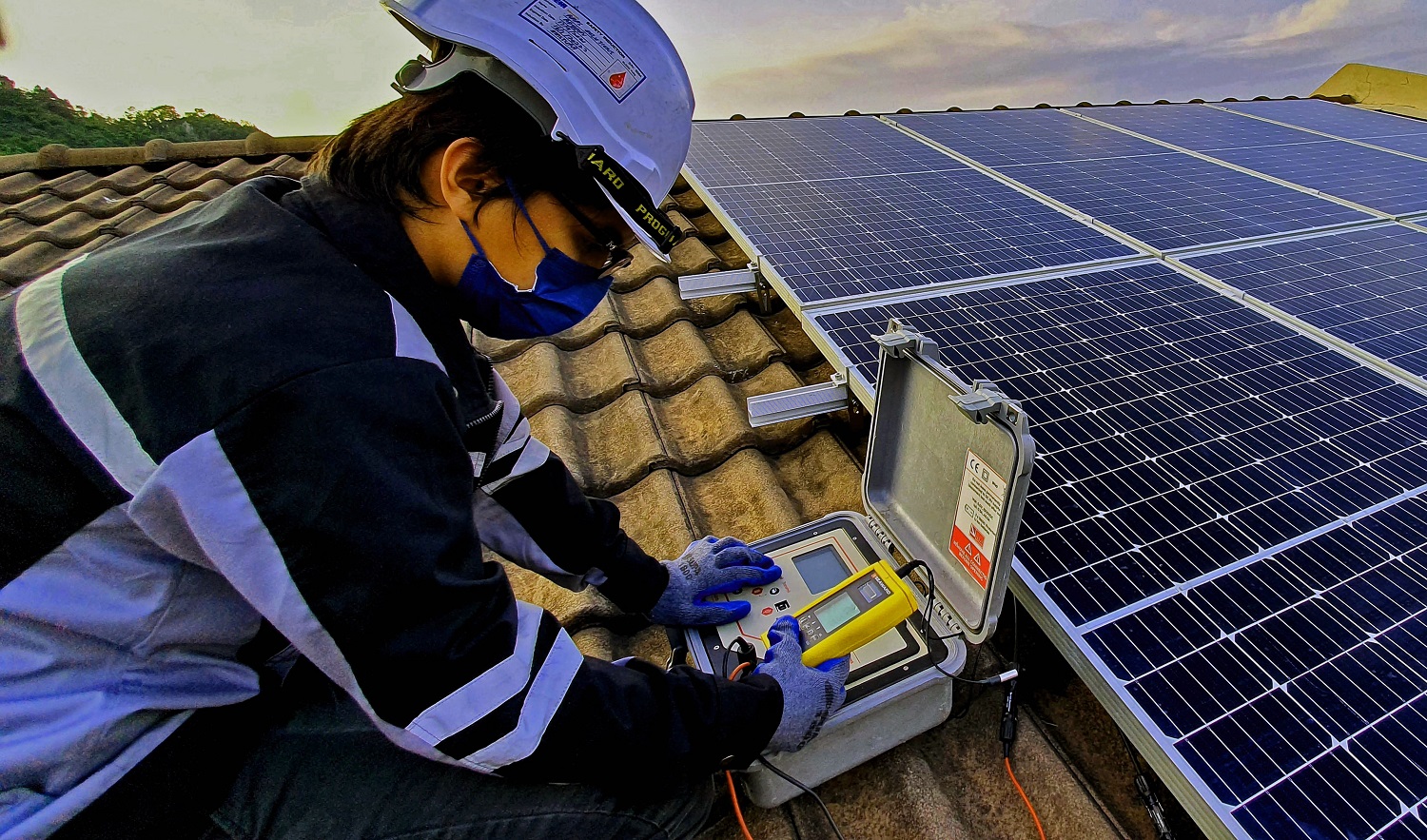
A qualified technician carefully testing cables during installation — the kind of rigorous inspection that cheap-cable shortcuts bypass.
Why Cheap Cables Flood the Market
Desperate cost-cutting during the post-load-shedding rush has created perfect conditions for rogue suppliers. Fly-by-night installers shave thousands off quotes by sourcing untested Chinese wire sold as “solar cable” on online marketplaces. These products often carry fake SABS or IEC markings. Meanwhile, legitimate manufacturers struggle to compete on price, even though their cables are engineered for Africa’s extreme conditions — high UV index, dust storms, and temperatures that swing 40°C in a single day.
How to Identify and Avoid Dangerous Cables
Knowledge is the best defence. Look for these red flags:
- Cables thinner than 4 mm² for strings above 10 A
- Single-layer insulation instead of double
- No visible “IEC 62930” or “SANS” marking
- Copper strands that feel soft or oxidised
- Connectors that feel loose or cheap
Demand test certificates, third-party verification, and installation by PV Green Card registered professionals. Reputable suppliers provide 25-year warranties and can prove compliance with SANS IEC 62930.
The Role of Standards and Enforcement
South Africa’s regulatory framework — SANS 10142-1-2, NRS 097 grid codes, and the forthcoming SANS 10142-3 — provides clear protection when followed. The South African Bureau of Standards (SABS) has adopted IEC 62930, but enforcement remains patchy. Industry bodies like SAPVIA and the PV Green Card programme are pushing for stricter type-testing and random site audits. Until full enforcement arrives, responsibility falls on developers, EPC contractors, and end-users to insist on certified products.
Real Stories from the Frontline
Installers in the Western Cape report discovering melted cables on 18-month-old commercial systems. One KwaZulu-Natal utility-scale plant lost three inverters after cheap DC cabling arced during a heatwave. A Cape Town homeowner watched his R250,000 rooftop array go up in smoke when undersized strings overheated. These are not isolated anecdotes — they represent a pattern confirmed by electrical contractors and insurers nationwide.
Protecting South Africa’s Solar Future
The message is clear: cheap cables are not a shortcut — they are a sabotage of the renewable transition. Every rand saved today can cost millions tomorrow in repairs, lost generation, legal battles, and reputational damage. By demanding certified, compliant cables manufactured to SANS IEC 62930 standards, South Africa can safeguard its solar boom and turn renewable energy into the reliable, safe powerhouse the country desperately needs.
Developers, installers, and policymakers must act now. Train more certified technicians, tighten import inspections, and educate consumers that the cheapest quote is rarely the safest. The solar plants rising across our landscape deserve wiring that matches their ambition — robust, long-lasting, and engineered for Africa.
The next time you see a gleaming solar array under the South African sun, remember: its true strength lies not just in the panels, but in the cables that quietly carry its power. Choose wisely, or risk watching that promise literally go up in flames.

Aerial view of a thriving South African solar farm — proof that when standards are upheld, the future of clean energy shines bright and safe.
The warning is loud, evidence-based, and urgent. South Africa’s solar power plants can power a greener tomorrow — but only if we stop gambling with cheap cables today.
Discover more from TECH-BRUNCH
Subscribe to get the latest posts sent to your email.