In a groundbreaking announcement that’s sending ripples through the global electric vehicle (EV) sector, Contemporary Amperex Technology Co. Limited (CATL), China’s undisputed leader in battery manufacturing, is set to dramatically ramp up its use of artificial intelligence (AI) in research and development (R&D). Robin Zeng, the company’s founder and chairman, revealed this strategic pivot during a high-profile session at the Chinese People’s Political Consultative Conference (CPPCC), emphasizing AI’s role in driving intelligent manufacturing and innovation.
This move comes at a time when the Electric Vehicle industry is grappling with demands for longer-range, faster-charging, and more sustainable batteries, positioning CATL to maintain its dominance in a market projected to reach $500 billion by 2030. For stakeholders in Cape Town’s burgeoning Silicon Cape ecosystem, where startups are leveraging AI for energy solutions amid South Africa’s renewable push, CATL’s initiative offers a blueprint for how advanced tech can accelerate battery breakthroughs. As the Western Cape invests in green tech to combat loadshedding, this development underscores the potential for AI to revolutionize energy storage, potentially influencing local R&D collaborations with Asian giants.
Zeng’s declaration isn’t just rhetoric; it’s backed by CATL’s formidable track record. As the world’s largest Electric Vehicle battery producer, supplying giants like Tesla, BMW, and Volkswagen, CATL commands over 37% of the global market share. The company’s annual R&D investment already exceeds 20 billion yuan (about $2.8 billion), fueling innovations like condensed batteries and sodium-ion technology. Now, with AI at the forefront, CATL aims to “hunt for next-gen revolutionary materials,” as Zeng has previously stated in interviews. This article explores the announcement’s context, CATL’s AI strategy, and seven transformative ways this push could reshape the EV battery landscape, drawing on insights from industry experts and recent developments.
CATL’s Dominance in the EV Battery Arena: A Brief Overview
Founded in 2011 by Robin Zeng, CATL has skyrocketed from a regional player to a global behemoth, thanks to relentless innovation and strategic partnerships. Headquartered in Ningde, Fujian province, the company employs over 100,000 people and operates factories across China, Europe, and North America. Its batteries power one in every three EVs worldwide, with a production capacity exceeding 300 GWh annually. Zeng, a physicist by training, has steered CATL toward sustainability, with initiatives like carbon-neutral factories and recycling programs.
The company’s success is rooted in its R&D prowess. With over 43,000 patents and collaborations with universities worldwide, CATL has pioneered technologies like cell-to-pack designs that boost energy density by 15-20%. However, facing competition from rivals like LG Energy Solution and Panasonic, CATL is doubling down on AI to maintain its edge. In Cape Town, where EV adoption is growing through incentives like the Automotive Investment Scheme, CATL’s advancements could lower battery costs, making electric mobility more accessible in South Africa.
Zeng’s vision extends beyond batteries; he envisions CATL as a leader in the zero-carbon transition, partnering with nearly 100 firms for battery swapping ecosystems. This holistic approach positions AI as a catalyst for not just product innovation but ecosystem-wide efficiency.
The Announcement: Zeng’s Call for AI-Driven R&D Acceleration
During the CPPCC session on March 3, 2026, Zeng Yuqun—better known as Robin Zeng—vowed to “further increase R&D investment, particularly by leveraging AI,” with a focus on intelligent manufacturing. He emphasized promoting Chinese products, technologies, and standards globally, while collaborating with partners to advance the new energy industry. This aligns with CATL’s “AI for Science” agenda, where the company invests heavily in augmented intelligence to solve complex industrial problems.
Zeng’s remarks build on CATL’s recent accolades, including a World Economic Forum award in January 2026 for AI-powered battery R&D. Ni Jun, CATL’s chief manufacturing officer, noted that AI alone isn’t sufficient; augmented intelligence provides deeper insights into materials and processes. This philosophy is evident in CATL’s use of AI for materials discovery, where algorithms simulate millions of chemical combinations to identify breakthrough electrolytes and cathodes.
In interviews, Zeng has stressed pragmatism, committing to products with superior performance, safety, and cost-efficiency through AI-enabled breakthroughs. For global audiences, including South African engineers working on battery tech for off-grid solutions, this signals a shift toward data-driven innovation that could accelerate the transition to sustainable energy.
CATL’s AI Strategy: From Data Reservoirs to Supercomputing Centers
CATL’s AI push is no afterthought; it’s a core pillar of its strategy. The company boasts a 20,000-strong R&D team dedicated to AI applications, from atomic-level simulations to factory automation. Its proprietary multimodal data reservoir—gathered from years of battery testing—feeds AI models that predict material behaviors with unprecedented accuracy.
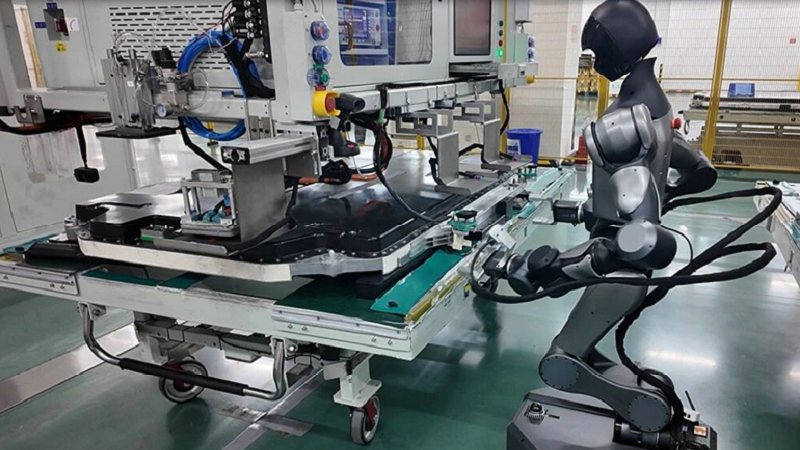
A key initiative is CATL’s supercomputing center, designed to train advanced AI for next-gen chemistries. This facility aims to “hunt for revolutionary materials” beyond lithium-ion, like sodium-ion and solid-state batteries. In 2025, CATL pioneered humanoid robots in high-volume production, integrating AI for precision assembly. These robots, deployed in factories, reduce errors and boost efficiency, showcasing AI’s role in intelligent manufacturing.
Zeng’s vision emphasizes open collaboration, with CATL sharing technologies through partnerships like its battery swap ecosystem with nearly 100 allies. This ecosystem uses AI for predictive maintenance and optimization, ensuring seamless operations. For Cape Town’s renewable sector, where battery storage is key to solar grids, CATL’s AI-driven efficiencies could inspire similar integrations, reducing costs and improving reliability.
7 Ways CATL’s AI Push Will Transform EV Batteries
CATL’s intensified AI focus is set to revolutionize the EV battery industry. Here are seven transformative ways this strategy could reshape the landscape:
1. Accelerated Materials Discovery
AI algorithms will simulate chemical interactions at scale, identifying new cathodes and electrolytes faster than traditional methods. This could cut R&D timelines from years to months, leading to higher-density batteries.
2. Enhanced Manufacturing Efficiency
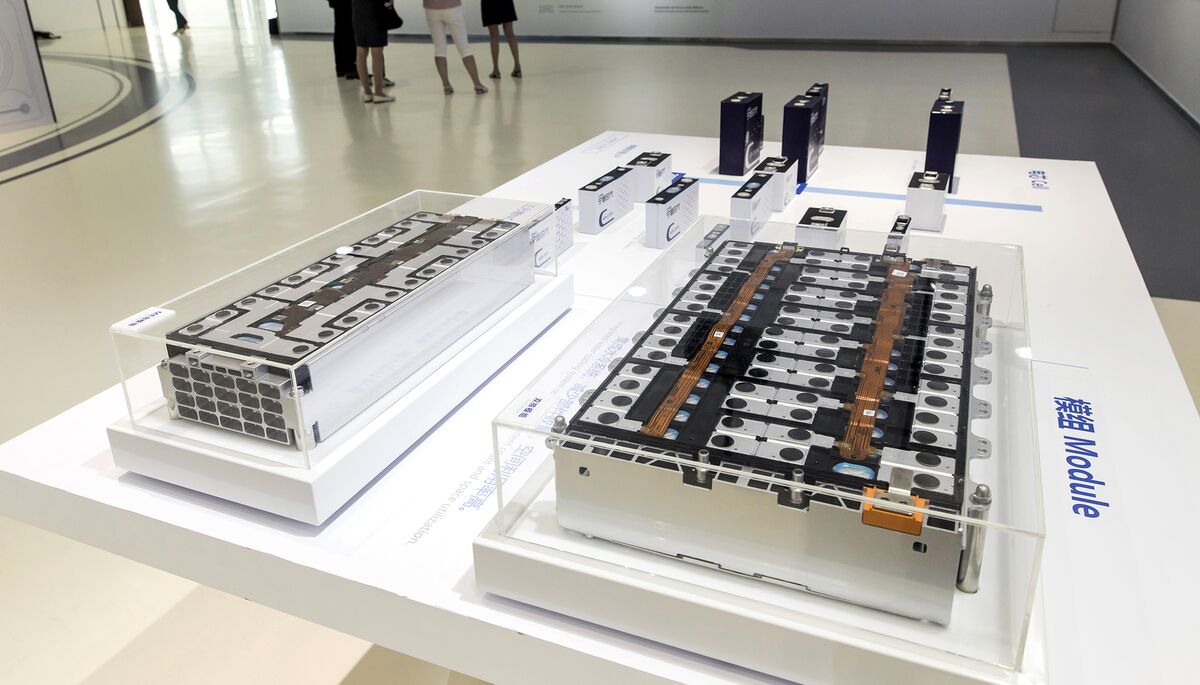
Humanoid robots and AI-optimized assembly lines will minimize defects, increasing yield rates by 20-30%. This reduces costs, making EVs more affordable globally.
3. Improved Battery Safety and Longevity
AI predictive models will forecast degradation patterns, enabling designs that last 1 million kilometers or more, addressing range anxiety.
4. Customized Energy Solutions
Multimodal AI will tailor batteries for specific applications, from urban EVs to heavy-duty trucks, expanding market reach.
5. Sustainable Recycling Innovations
AI will optimize recycling processes, recovering 95% of materials and reducing environmental impact, aligning with global green standards.
6. Global Standardization Push
By leveraging AI for superior products, CATL can promote Chinese standards internationally, influencing EV regulations and supply chains.
7. Ecosystem-Wide Optimization
AI-integrated battery swap networks will predict demand and maintenance, creating seamless user experiences and boosting adoption.
These impacts position CATL as a pacesetter, potentially capturing 50% of the market by 2030.
Challenges and Criticisms: Navigating the AI Frontier
Despite the promise, CATL’s AI push faces hurdles. Geopolitical tensions, including US restrictions on tech exports, could limit access to advanced chips. Critics argue that over-reliance on AI might overlook human intuition in complex R&D. Ethical concerns around data privacy in AI simulations also loom.
Zeng addresses these by emphasizing “augmented intelligence,” combining AI with human expertise. CATL’s carbon-neutral goals mitigate environmental critiques, but scaling AI sustainably requires massive energy, posing irony in a green company.
In South Africa, where AI ethics are debated in academia, CATL’s approach prompts discussions on balanced innovation.
Future Outlook: CATL’s Role in the Global Energy Transition
Looking ahead, CATL’s AI-enhanced R&D could accelerate the EV revolution, with breakthroughs like solid-state batteries by 2028. Zeng’s vision of zero-carbon transitions through collaboration could see CATL partnering with African firms for mining and recycling, boosting South Africa’s lithium ambitions.
As CATL invests billions in supercomputing, its influence will grow, shaping standards and reducing costs. For Cape Town’s tech ecosystem, this means opportunities for joint ventures in AI-battery tech.
A Catalyst for Change in the Electric Vehicle World
CATL’s commitment to stepping up AI in R&D, as announced by founder Robin Zeng, marks a revolutionary leap for the Electric Vehicle battery industry. With seven transformative ways outlined, this strategy promises to drive efficiency, safety, and sustainability. As global markets evolve, CATL’s innovations could power a greener future, inspiring collaborations worldwide—including in South Africa’s dynamic tech landscape.
Discover more from TECH-BRUNCH
Subscribe to get the latest posts sent to your email.