In a landmark shift reshaping South Africa’s automotive landscape, Chinese new-energy vehicle giant BYD has emerged as the top electric car brand, posting sales that have left traditional powerhouses like Honda and Mazda in the dust. With 589 units registered in March 2026 alone, BYD’s debut in official Naamsa figures marks a pivotal moment for electric mobility in the country. This isn’t just incremental growth—it’s an explosive surge that signals the rapid electrification of South African roads and challenges long-held market hierarchies.

As South Africa grapples with rising fuel costs, environmental pressures, and the push toward sustainable transport, BYD’s affordable electric and plug-in hybrid offerings are winning over buyers who once defaulted to reliable Japanese brands. This article dives deep into the data, strategies, and implications of BYD’s triumph, exploring exactly how this top electric car brand is outselling Honda and Mazda while paving the way for a greener future.
From model breakdowns to infrastructure investments, we’ll uncover the five powerful drivers behind this dominance and what it means for consumers, competitors, and the broader EV market in South Africa.
BYD’s Historic Entry: Disrupting the South African Auto Hierarchy
South Africa’s new vehicle market has long been dominated by established players, with Toyota, Volkswagen, and Suzuki leading the pack in overall sales. However, the electric vehicle segment has been slower to take off compared to global trends, hampered by infrastructure gaps and higher upfront costs. Enter BYD, which launched in South Africa in mid-2023 and only began official sales reporting to the National Association of Automobile Manufacturers of South Africa (Naamsa) in March 2026.
In that single month, BYD registered a staggering 589 units through its dealer network. This performance catapulted the brand to 21st place among the country’s top-selling automakers—edging out Mercedes-Benz SA’s estimated 595 units and comfortably surpassing Honda Motor Southern Africa (348 units), Mitsubishi Motors SA (241 units), and Mazda Southern Africa (209 units). For context, these figures represent a clear upset: legacy brands with decades of local presence are now trailing a relatively new entrant focused exclusively on new-energy vehicles (NEVs), including battery electric vehicles (BEVs) and plug-in hybrids (PHEVs).
This outselling isn’t a fluke. BYD’s success builds on years of global momentum, where the company overtook Tesla as the world’s largest EV seller in 2025. In South Africa, the brand’s dual-mode technology—blending electric efficiency with hybrid range—resonates deeply with local drivers facing long distances and variable charging access. Early 2026 data highlights how BYD is not merely competing but redefining the EV conversation, contributing to a broader NEV market growth of 7.1% in 2025 despite pure EV sales dipping slightly.
Breaking Down the Numbers: March 2026 Sales That Turned Heads
To understand BYD’s explosive impact, let’s examine the granular sales data from March 2026. The brand’s portfolio delivered a balanced mix of pure EVs and PHEVs, proving its adaptability to South African conditions. Leading the charge was the Dolphin Surf, SA’s most affordable fully electric vehicle priced from R341,900, which accounted for 239 units or 40.6% of BYD’s total. This compact hatchback’s blend of style, efficiency, and value has made it a bestseller among urban commuters seeking an entry point into electrification.
Following closely were PHEV models tailored for versatility: the Sealion 6 with 130 units, the Shark 6 PHEV bakkie at 94 units (impressively ranking 12th in the national bakkie sales chart), and the Sealion 5—the country’s most affordable PHEV starting at R499,900—with 72 units. Pure EV stalwarts like the Atto 3 crossover added 28 units, while the Seal sedan and Sealion 7 crossover each contributed 9 units, and the original Dolphin hatch rounded out with 8 units.
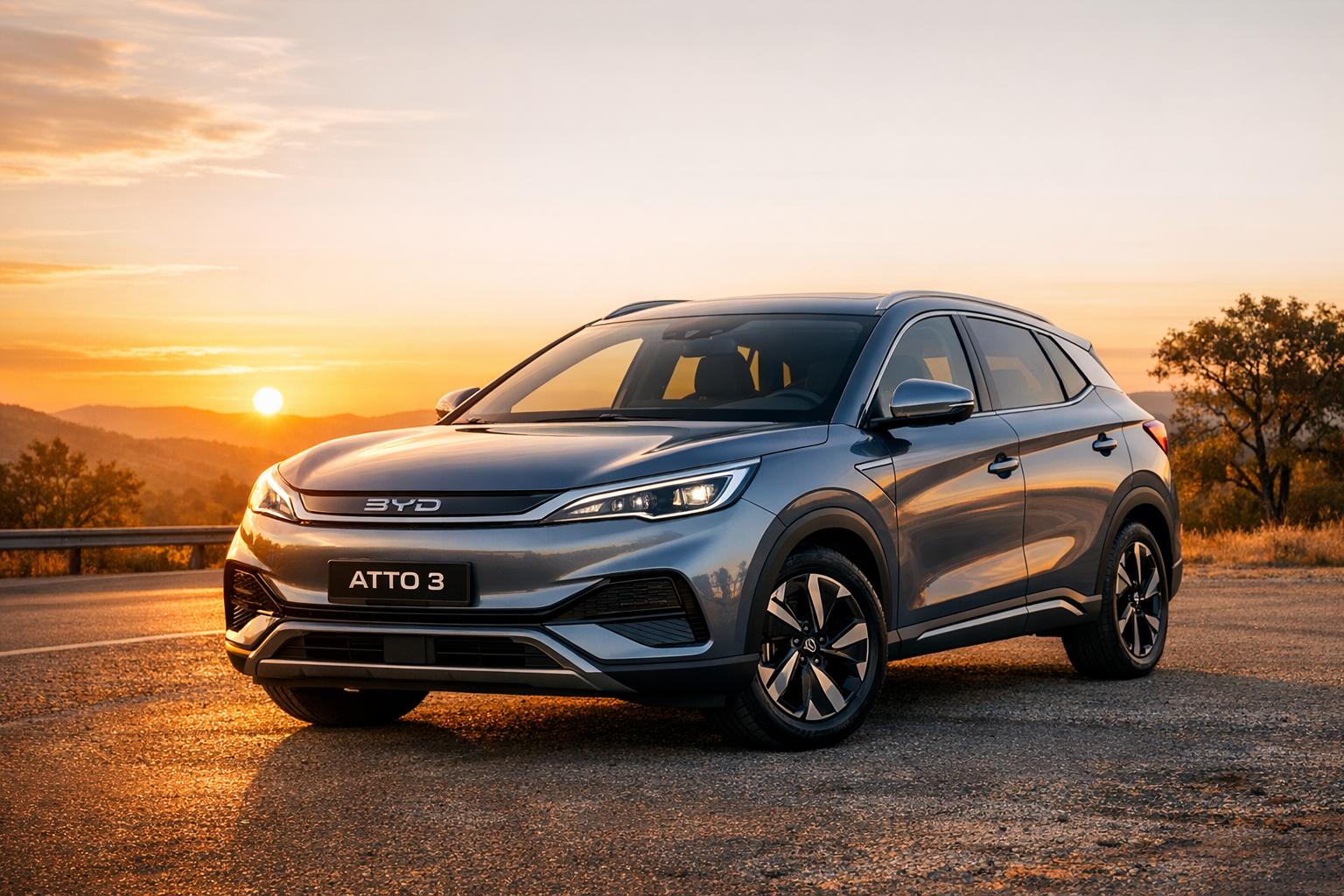
These numbers underscore a strategic pivot. While BYD is renowned globally for pure EVs, its PHEV lineup addresses range anxiety head-on, offering drivers the security of a petrol backup alongside electric torque and low running costs. All models come backed by a robust 5-year/100,000 km vehicle warranty and an 8-year/150,000 km (or up to 200,000 km) Blade battery warranty, providing peace of mind that traditional brands often match but rarely exceed at these price points.
Comparatively, Honda and Mazda’s March figures reflect broader challenges in the passenger car segment. Honda’s 348 units spanned its popular Elevate and HR-V lines, while Mazda’s 209 units leaned on the CX-5 and BT-50. Both brands excel in reliability and resale value, yet they lack the electrified options and aggressive pricing that BYD brings to the table. In a market where new vehicle sales hit a decade-high of 596,818 units in 2025, BYD’s debut proves that innovation and accessibility can rapidly erode established footholds.
The 5 Powerful Drivers Behind BYD’s Dominance Over Honda and Mazda
What makes BYD the top electric car brand outselling Honda and Mazda in South Africa? Five key factors stand out, each amplifying the brand’s appeal in a competitive landscape.
First, unmatched affordability meets premium technology. Models like the Dolphin Surf undercut rivals by thousands of rands while packing advanced features such as the revolutionary Blade Battery—safer, more durable, and denser than conventional lithium-ion packs. This democratizes EVs, drawing in first-time buyers who viewed Honda or Mazda as safer bets but now see BYD as the smarter long-term investment.
Second, PHEV innovation tailored to local needs. South African drivers often cover vast distances between cities, where charging infrastructure remains patchy outside major metros. BYD’s dual-mode PHEVs, such as the Sealion 6 and Shark 6, deliver electric efficiency for daily commutes with hybrid fallback for road trips—addressing a pain point Honda and Mazda’s non-electrified lineups don’t fully resolve yet.

Third, rapid network expansion and customer-centric support. BYD hit its target of 35 dealerships by early 2026 ahead of schedule, with plans scaling to 60-70 by year-end. This physical presence, combined with superior after-sales service, builds trust faster than Honda and Mazda’s more mature but less agile networks in the EV space.
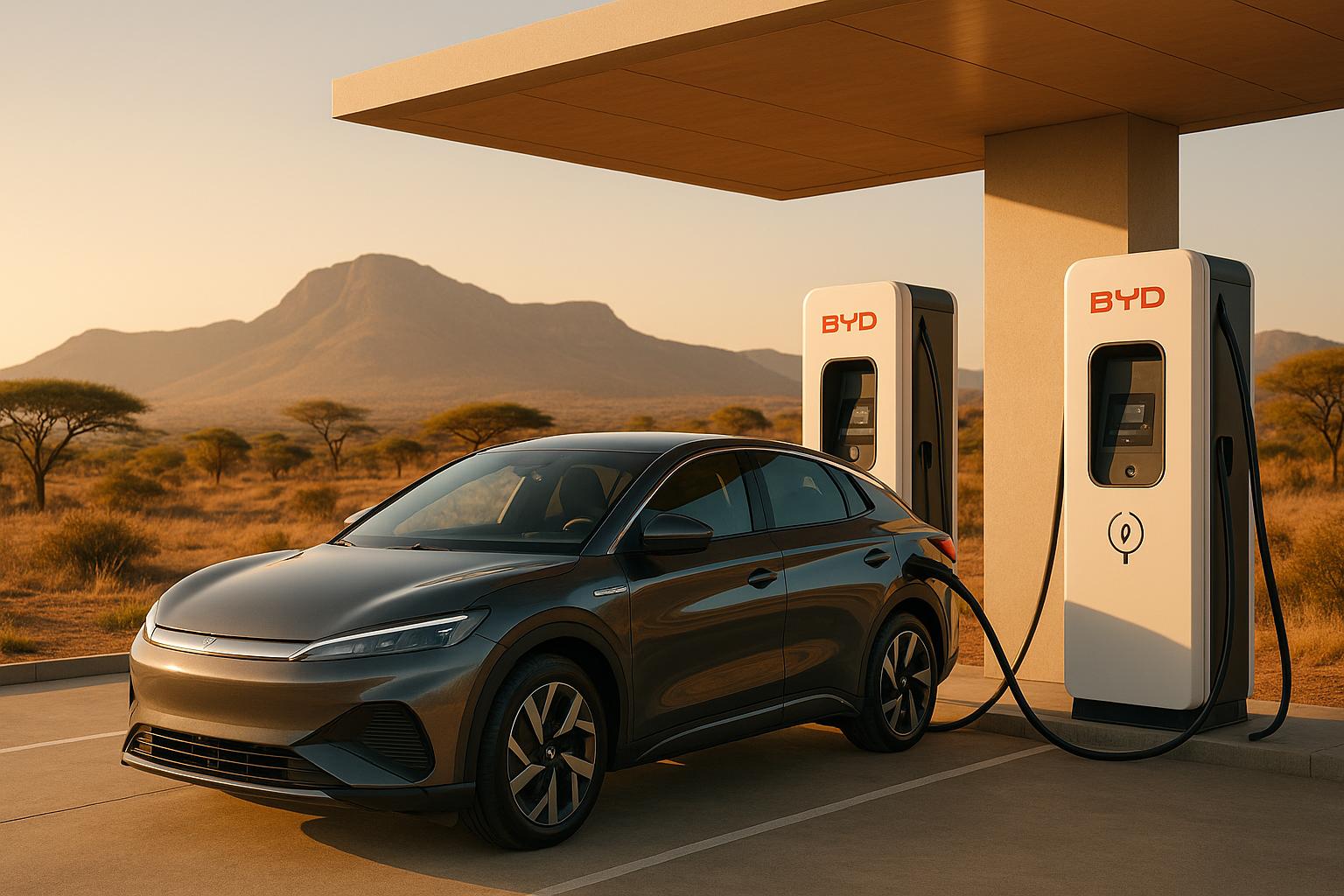
Fourth, strategic infrastructure investment. BYD is rolling out up to 300 fast-charging stations nationwide by the end of 2026, including megawatt-level units at dealerships and key routes. This proactive approach mitigates one of the biggest barriers to EV adoption, giving buyers confidence that their Dolphin or Atto 3 won’t leave them stranded—unlike the slower infrastructure rollout from traditional brands.
Fifth, global expertise localized for South Africa. Leveraging its position as the 2025 global EV leader with millions of units sold worldwide, BYD adapts models like the Seal and Atto 3 for local tastes, incorporating rugged suspension tweaks and enhanced infotainment for South African roads. This contrasts with Honda and Mazda’s more conservative updates, allowing BYD to capture the growing eco-conscious demographic shifting from fossil fuels.
Together, these drivers create a perfect storm, propelling BYD ahead in a market where NEV share reached 2.8% in 2025 and continues climbing.
Infrastructure Boom: Powering the EV Revolution in South Africa
Charging infrastructure has historically lagged in South Africa, but BYD is flipping the script. Plans for 200-300 Flash chargers by late 2026 include solar-integrated stations to combat load-shedding concerns, ensuring reliable access even during peak demand. Dealerships double as hubs, offering test drives, servicing, and education sessions that demystify EVs for skeptical buyers.
This ecosystem contrasts sharply with Honda and Mazda’s focus on traditional service centers. Early adopters report seamless experiences with BYD’s app-based charging reservations and over-the-air updates, features that enhance ownership without the premium price tag of European alternatives. As a result, word-of-mouth is fueling further sales, creating a virtuous cycle that traditional brands struggle to match in the electrified segment.
Consumer Perspectives: Why South Africans Are Choosing BYD
Feedback from early BYD owners highlights practical benefits: lower fuel bills (often 70-80% savings on electricity versus petrol), quieter rides, and instant torque for overtaking on highways. Families praise the Sealion models’ spacious interiors and safety tech, while bakkie enthusiasts eye the Shark 6 as a modern, efficient alternative to diesel workhorses.
Honda loyalists cite brand heritage and parts availability, yet many admit switching after test-driving a Dolphin Surf—impressed by its R341,900 price versus comparable ICE models. Mazda fans value driving dynamics, but BYD’s data-driven approach (with real-world efficiency claims verified locally) is winning converts. Broader market trends support this: while pure BEV sales dipped 13.4% in 2025, NEVs overall grew, with PHEVs surging due to hybrid appeal.
Challenges Ahead: Navigating the Road to Full Electrification
Despite the surge, hurdles remain. Range anxiety persists in rural areas, and electricity tariffs can erode some savings. Competition from emerging Chinese brands like Chery and GWM adds pressure, while global supply chain issues could affect parts. Honda and Mazda, meanwhile, are accelerating hybrid and EV plans—Toyota’s 2026 EV launches being a prime example—to reclaim ground.
Regulatory support, such as potential incentives under the Electric Vehicle White Paper, will be crucial. BYD’s local assembly ambitions could further lower costs, but scaling production amid economic volatility demands careful navigation.
Looking Forward: BYD’s 2026 Roadmap and Market Transformation
BYD has teased launches like the Atto 2 compact crossover and Sealion 8 SUV, plus the premium Denza sub-brand, set to expand its lineup in 2026. With YTD momentum building post-March, analysts project BYD could crack the top 15 sellers by year-end, further eroding Honda and Mazda’s shares.
For the industry, this signals a broader transformation. South Africa’s auto sector, a key economic pillar, is evolving toward sustainability, creating jobs in charging and tech while reducing emissions. Consumers gain more choices, and the top electric car brand’s success proves that disruption favors the bold.
Why BYD’s Victory Matters for Every South African Driver
BYD’s explosive rise—outselling Honda and Mazda through innovation, value, and vision—heralds a new chapter for mobility in South Africa. As the top electric car brand cements its lead, it inspires confidence in electrification’s viability, even in emerging markets. Whether you’re a commuter eyeing the Dolphin Surf or a fleet manager considering PHEV bakkies, BYD’s March 2026 benchmark proves the future is already here.
In the coming months, watch for accelerated adoption as infrastructure catches up. For now, one thing is clear: the electric revolution in South Africa has a dominant leader, and it’s driving change at full throttle. South Africans aren’t just buying cars—they’re investing in a cleaner, more efficient tomorrow.
Discover more from TECH-BRUNCH
Subscribe to get the latest posts sent to your email.