In a move that has sent ripples through the global cybersecurity community, Google has issued a stark new warning about the looming quantum computing security apocalypse. The tech giant has dramatically accelerated its internal timeline for defending against quantum threats, setting a firm 2029 deadline for full migration to post-quantum cryptography. What was once viewed as a distant theoretical risk—dubbed “Q-Day,” when powerful quantum computers could shatter today’s encryption standards—now feels alarmingly close.
This isn’t science fiction; it’s a urgent call to action that could reshape how we protect everything from bank accounts to national secrets.

Experts have long warned that quantum computers, leveraging the bizarre principles of superposition and entanglement, could solve complex mathematical problems that underpin modern encryption in a fraction of the time classical computers require. Google’s latest announcement, detailed in recent updates and analysed across tech outlets, underscores that advances in quantum hardware and error correction mean the security apocalypse may arrive sooner than anyone anticipated. With adversaries already harvesting encrypted data today in “store now, decrypt later” attacks, the window for preparation is closing fast.
This article dives deep into Google’s shocking warning, the science behind the threat, the real-world implications, and actionable steps for businesses, governments, and individuals. As a senior news writer covering emerging tech risks, I’ll break down why this 2029 alert demands immediate attention—and how we can turn potential devastation into an opportunity for stronger, future-proof security.
What Is Quantum Computing and Why Does It Pose an Existential Threat to Digital Security?
Quantum computing represents a paradigm shift in processing power. Unlike traditional bits that are either 0 or 1, quantum bits—or qubits—can exist in multiple states simultaneously thanks to superposition. When entangled, these qubits can perform calculations at speeds that make even the world’s fastest supercomputers look prehistoric.
The core danger lies in algorithms like Shor’s, developed in 1994 by mathematician Peter Shor. Shor’s algorithm allows a sufficiently powerful quantum computer to factor large numbers exponentially faster than classical methods. Most public-key cryptography systems, including RSA and ECC used in HTTPS, VPNs, banking apps, and digital signatures, rely on the difficulty of factoring these enormous primes. A cryptographically relevant quantum computer could crack 2048-bit RSA keys in days or even hours, rendering billions of encrypted communications vulnerable overnight.
Google’s own Quantum AI team has made significant strides here. Their latest processors have demonstrated progress in reducing the “noisy” errors that plague current NISQ (Noisy Intermediate-Scale Quantum) devices. As reported in analyses tied to Google’s updates, estimates for breaking encryption have dropped from needing billions of perfect qubits to around one million noisy ones—a far more achievable milestone. This progress isn’t abstract; it directly accelerates the timeline for Q-Day.

The result? A potential security apocalypse where encrypted emails, financial transactions, medical records, and government classified data could be retroactively decrypted. Hackers or nation-states collecting data now could unlock it later, creating a massive “harvest now, decrypt later” vulnerability that Google has explicitly highlighted in its calls to action.
Google’s Shocking 2029 Deadline: Inside the New Warning
On March 25, 2026, Google publicly updated its cryptography migration timeline, moving the target for full post-quantum readiness across its infrastructure to 2029. This isn’t a minor tweak—it’s a dramatic escalation from earlier, more speculative projections that stretched into the 2030s or beyond. The company cited rapid advances in quantum hardware development, improved error correction techniques, and revised resource estimates for quantum factoring as the driving factors.
In accompanying statements, Google leaders emphasized that “quantum frontiers may be closer than they appear.” The firm is leading by example, committing to crypto-agility—the ability to swap out vulnerable algorithms without disrupting services—and urging the broader industry to follow suit. This aligns with earlier February 2026 policy briefings where Google called on governments and organizations to treat post-quantum cryptography as critical infrastructure.
The timing is no coincidence. With U.S. presidential elections on the horizon in 2028, the 2029 deadline aligns with major global policy windows. Google isn’t panicking; it’s acting with calculated urgency after internal modeling showed that current encryption could face real threats far earlier than expected. This warning echoes across reports from outlets like Gizmodo, which described the shift as a “dramatic escalation” in preparations for the quantum security apocalypse.
Decoding Q-Day: The Day Encryption Dies
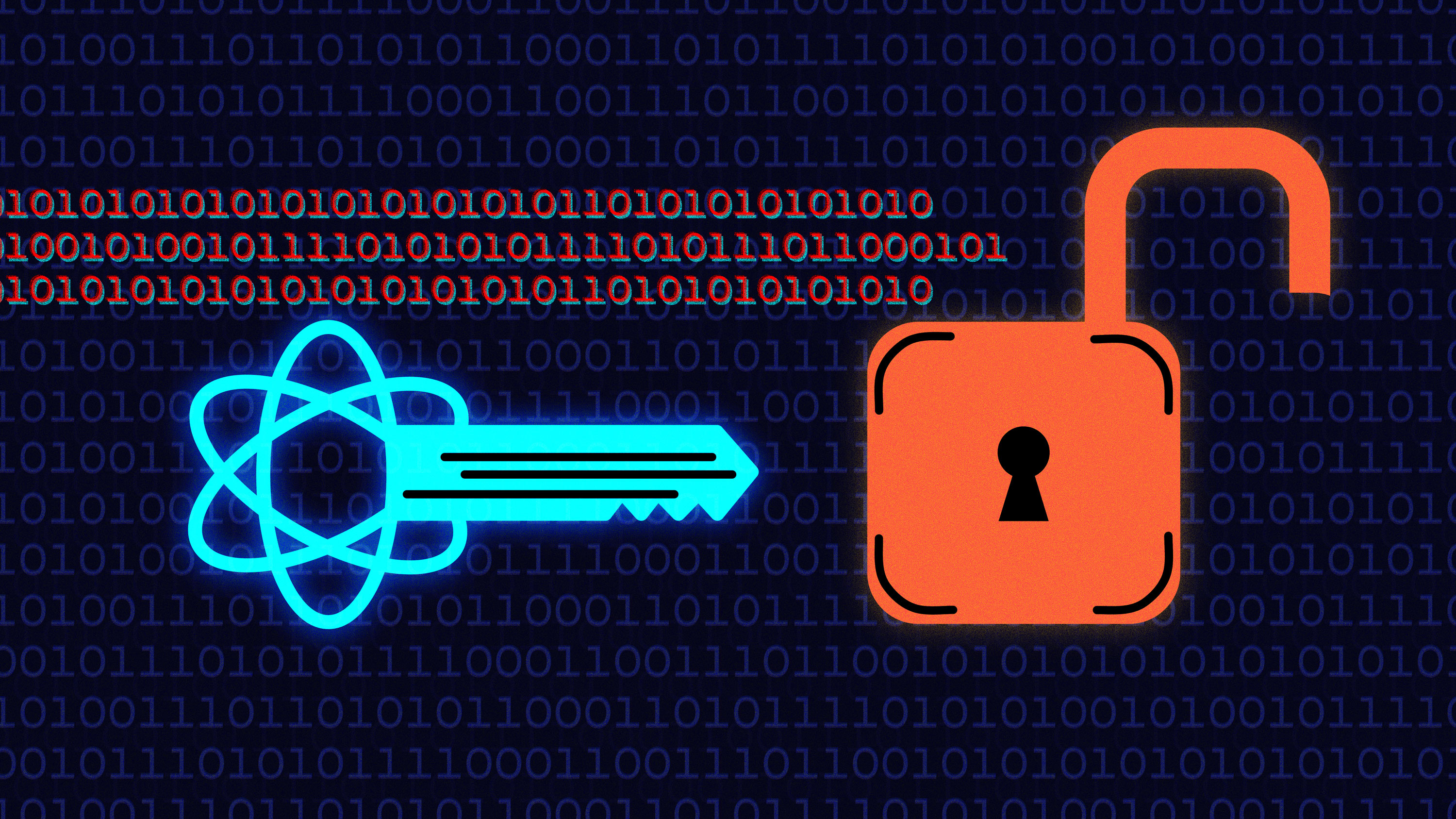
Q-Day, sometimes called the quantum apocalypse, is the hypothetical moment when a quantum computer first achieves the scale needed to break widely used public-key cryptography. It won’t happen overnight—migration to quantum-resistant systems will take years—but the damage from unpreparedness could be catastrophic.
Imagine a world where secure online shopping collapses, digital identities are forged en masse, and critical infrastructure like power grids or air traffic control systems face forged commands. The comparison to Y2K is apt, but the stakes are higher because quantum threats are asymmetric: well-resourced actors could exploit them quietly for years before detection.
Google’s warning stresses that we cannot afford to wait. Even if a full-scale quantum computer isn’t online by 2029, partial capabilities combined with classical computing could still pose hybrid risks.
The Hidden Danger: “Store Now, Decrypt Later” Attacks Already Underway
One of the most insidious aspects of Google’s alert is the confirmation that “store now, decrypt later” (SNDL) attacks are happening today. Adversaries—ranging from cybercriminals to state-sponsored hackers—are intercepting and storing vast amounts of encrypted traffic. They don’t need a quantum computer yet; they’re banking on one arriving soon.
This tactic targets everything from TLS-secured web sessions to email archives and cloud backups. Once Q-Day hits, those stored troves become goldmines. Google has repeatedly warned that this threat model is no longer hypothetical, urging immediate prioritization of post-quantum upgrades for high-value data.
Post-Quantum Cryptography: The Lifeline Against the Apocalypse
The solution? Post-quantum cryptography (PQC), a new suite of algorithms designed to resist quantum attacks. Standards bodies like NIST have already selected candidates such as CRYSTALS-Kyber for key encapsulation and CRYSTALS-Dilithium for digital signatures. These rely on lattice-based, hash-based, or multivariate problems that even quantum computers struggle to solve efficiently.
Google has been at the forefront since 2016, experimenting with PQC in internal systems and Chrome. Their 2029 timeline includes full migration for authentication, digital signatures, and internal communications. The company stresses “crypto-agility” to ensure seamless transitions.
Benefits extend beyond defense: PQC can enhance overall system resilience while maintaining performance. However, challenges remain—larger key sizes can increase bandwidth demands, and integration requires careful testing to avoid breaking legacy systems.
Global Implications: Who Stands to Lose the Most?
The quantum security apocalypse won’t hit everyone equally. Financial institutions handling trillions in daily transactions face existential risks if signatures can be forged. Healthcare providers storing sensitive patient data could see privacy breaches on an unprecedented scale. Governments risk compromised military communications and intelligence.
Emerging economies and small businesses, often lagging in tech adoption, may suffer disproportionately without proactive guidance. Even individual users could see their passwords, social media accounts, and cryptocurrencies exposed if underlying protocols fail.
Google’s warning extends a broader industry call: regulators must mandate PQC timelines, similar to how GDPR forced privacy reforms. International cooperation is essential, as quantum threats transcend borders.
What Organizations and Individuals Must Do Right Now
Preparation starts today. Here’s a practical roadmap:
- Inventory Your Cryptography: Audit all systems using RSA or ECC. Prioritize high-sensitivity data for PQC pilots.
- Adopt Crypto-Agility: Design systems that support algorithm swaps without downtime.
- Implement Hybrid Solutions: Layer classical and post-quantum methods for immediate protection.
- Train Teams: Invest in quantum literacy for IT and security staff.
- Engage Policymakers: Advocate for standards and funding, as Google has done.
Individuals can start by using browsers and apps that support emerging PQC features and enabling multi-factor authentication with hardware keys.
Balancing the Scales: Quantum’s Revolutionary Upsides
It’s not all doom. Quantum computing promises breakthroughs in drug discovery, climate modeling, materials science, and optimization problems that could solve global challenges. Google’s Quantum AI lab exemplifies this dual-use nature—building tools that advance humanity while sounding alarms on the security side.
The key is responsible development. By heeding this 2029 alert, we can harness quantum power safely.
Why Google’s Warning Is a Wake-Up Call the World Can’t Ignore
Google’s devastating 2029 alert on the quantum computing security apocalypse isn’t hype—it’s a data-driven response to accelerating realities. From SNDL attacks already in progress to revised qubit estimates shrinking the timeline, the evidence is clear: procrastination is no longer an option.
As we stand on the brink of this new era, proactive migration to post-quantum cryptography will separate the resilient from the vulnerable. Businesses that act now will gain a competitive edge. Governments that lead will safeguard citizens. And individuals who stay informed will protect their digital lives.
The quantum future is coming—faster than we thought. Google’s shocking warning gives us the gift of time, but only if we seize it. The security apocalypse is avoidable, but only through urgent, coordinated action starting today. The 2029 deadline isn’t a finish line; it’s a starting gun for a safer digital world.
(This comprehensive analysis draws on Google’s public updates, expert reporting, and technical context to provide clear, actionable insights for readers navigating the quantum era.)
Discover more from TECH-BRUNCH
Subscribe to get the latest posts sent to your email.