
In a stunning development that has electrified the tech world, Google has unveiled TurboQuant, a groundbreaking new AI memory compression algorithm poised to slash the enormous memory demands of large language models by up to six times. Announced just yesterday on March 25, 2026, this revolutionary breakthrough from Google Research promises zero accuracy loss while delivering up to eight times faster performance on high-end GPUs.
The internet, never one to miss a cultural callback, has already dubbed it the real-life “Pied Piper”—a direct nod to the iconic compression tech from the HBO series Silicon Valley. What once seemed like fictional genius is now Google’s latest weapon in the quest for efficient AI.
This isn’t just another incremental tweak. TurboQuant tackles one of AI’s most stubborn bottlenecks: the massive key-value (KV) cache that powers inference in models like Gemma, Mistral, and beyond. By compressing this “digital cheat sheet” without retraining or sacrificing quality, Google could dramatically lower infrastructure costs, speed up deployments, and even reshape the economics of the entire AI industry. As excitement builds across X, Reddit, and tech forums, experts are hailing it as a potential game-changer that could make advanced AI accessible on everything from data centers to edge devices.
Understanding the AI Memory Crisis TurboQuant Solves
Modern large language models rely heavily on KV caches during inference. These caches store pre-computed key and value vectors for every token in a conversation, enabling lightning-fast attention calculations. But as context windows grow longer and models scale to billions of parameters, KV cache memory balloons exponentially—often becoming the single biggest limiter on performance and cost.
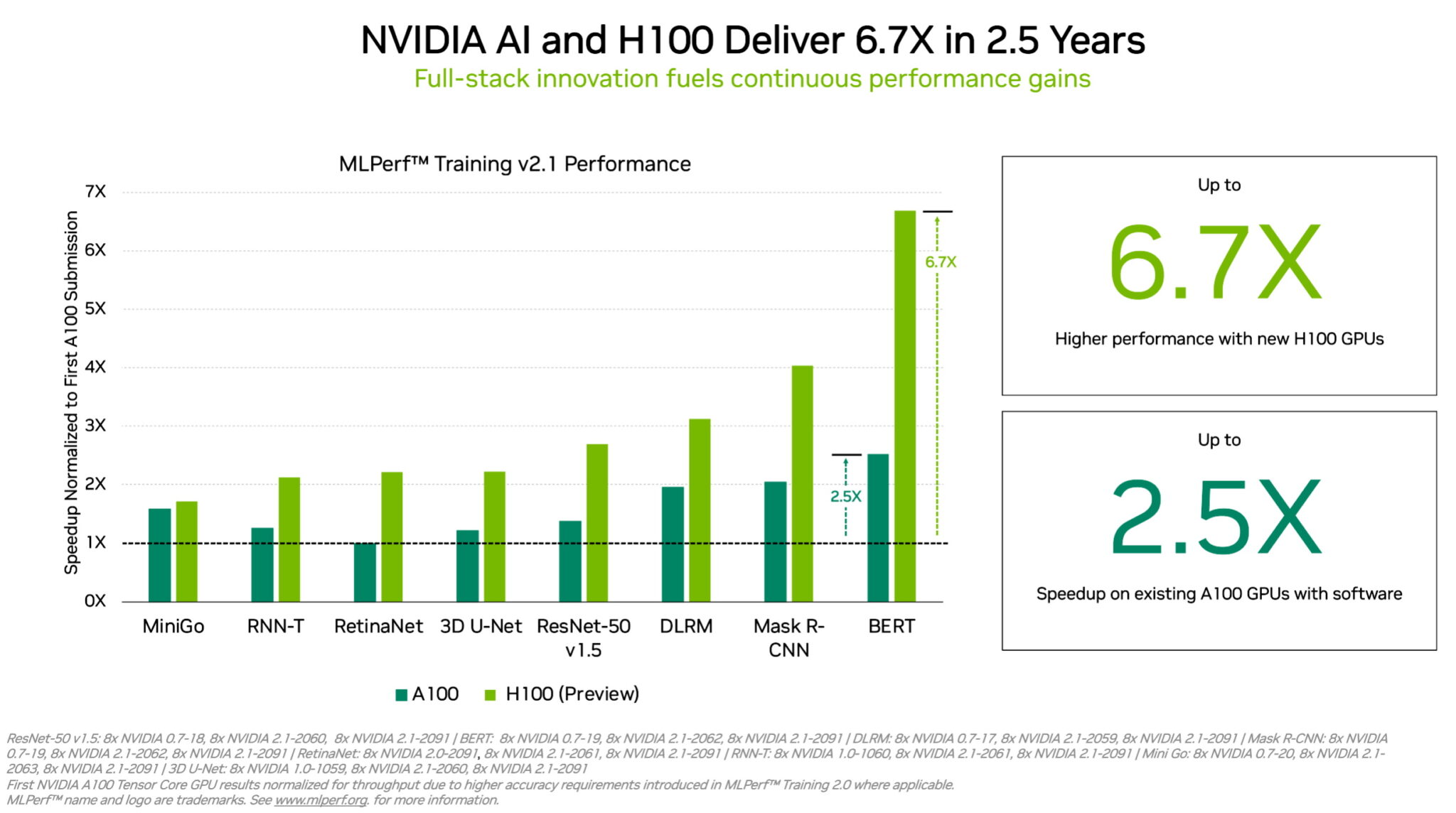
Traditional quantization methods try to shrink these vectors by reducing precision, but they introduce accuracy trade-offs and extra overhead from quantization constants. Google’s new approach flips the script entirely. TurboQuant achieves extreme compression through mathematically elegant techniques that eliminate overhead while preserving perfect fidelity. Early benchmarks on open models show KV cache memory reduced by at least 6x and attention logit computation sped up by 8x on Nvidia H100 GPUs—all with zero loss in downstream tasks like LongBench or Needle-In-A-Haystack retrieval.

The implications ripple far beyond raw numbers. Lower memory needs mean fewer GPUs per workload, potentially cutting inference costs by 50% or more for hyperscalers. Smaller footprints could also unlock powerful on-device AI for smartphones and laptops, reducing reliance on cloud services and enhancing privacy.
Inside TurboQuant: The Science Behind the 6X Magic
At its core, TurboQuant is a two-stage, data-oblivious quantization framework built on two companion innovations: PolarQuant and Quantized Johnson-Lindenstrauss (QJL). First presented in supporting papers slated for ICLR 2026 and AISTATS 2026, these methods work in harmony to deliver near-optimal compression.

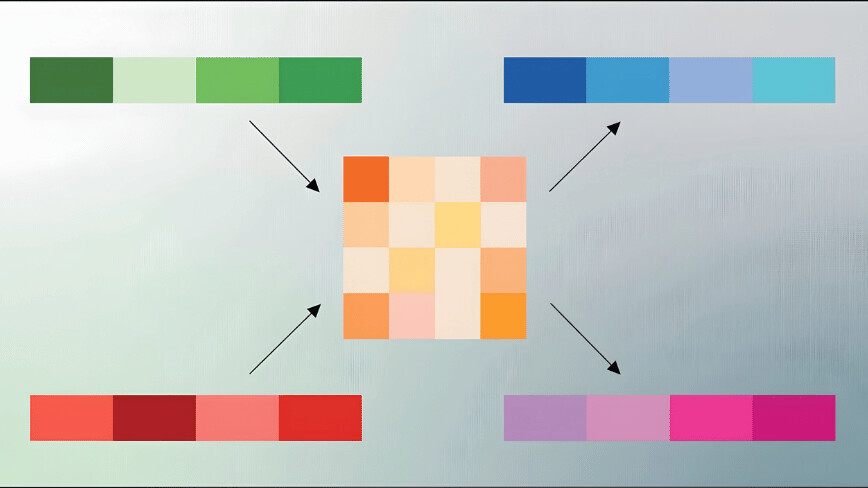
PolarQuant kicks things off by transforming high-dimensional vectors into polar coordinates—separating magnitude (radius) from direction (angle). This clever rotation concentrates data into predictable distributions, allowing efficient scalar quantization per coordinate without the usual normalization overhead. The result is a high-quality “shorthand” that captures the essence of each vector while slashing storage.
Any tiny residual errors are then cleaned up by QJL, a quantized version of the classic Johnson-Lindenstrauss lemma. This adds a lightweight one-bit correction layer that projects errors into a lower-dimensional space, preserving inner-product similarities critical for attention mechanisms. Together, the duo compresses KV caches down to just 3 bits per value—far below conventional 16-bit baselines—without any model fine-tuning required.
Google tested the full stack across multiple long-context benchmarks using models like Gemma and Mistral. Results were flawless: perfect retrieval accuracy, matching or beating baselines, and massive efficiency gains. The algorithm even shines in vector search applications, outperforming older product quantization methods on standard datasets like GloVe.
Why the Internet Is Calling It the Real ‘Pied Piper’
The “Pied Piper” nickname exploded almost instantly after the announcement. Fans of the HBO comedy Silicon Valley instantly recognized the parallels: the show’s fictional startup built its empire around a revolutionary middle-out compression algorithm that crushed file sizes with near-lossless results. Google’s TurboQuant delivers the same vibe—extreme efficiency without quality penalties—but for AI’s working memory instead of video files.
Tech Twitter lit up within hours. Posts flooded timelines with side-by-side memes, GIFs of the show’s characters, and jokes about Richard Hendricks finally getting his due. Even Cloudflare CEO Matthew Prince weighed in, calling it “Google’s DeepSeek moment”—a reference to another efficiency breakthrough that shook the industry. The comparison isn’t just humorous; it underscores how TurboQuant could democratize AI the way Pied Piper promised to democratize data storage.
Market Shockwaves: Memory Stocks Tumble as AI Economics Shift
Wall Street took notice immediately. Shares of major memory and storage players—including Micron, Western Digital, and Seagate—dropped sharply in after-hours trading following the news. Analysts pointed to the obvious: if AI models need dramatically less RAM and NAND flash to run, demand for high-bandwidth memory could soften in the short term.
Yet many experts argue this is a classic Jevons Paradox scenario. Cheaper, faster inference often spurs more usage, not less. Lower barriers could explode adoption of long-context models, multimodal AI, and real-time applications, ultimately driving net-new hardware demand. Morgan Stanley noted that while inference-phase KV caching benefits most, training workloads and model weights remain memory-hungry.
Google itself is already eyeing internal integration. The research explicitly names Gemini as a prime application target, suggesting TurboQuant could soon power faster, leaner versions of its flagship models.
Broader Implications for AI Developers, Enterprises, and the Future
For developers and enterprises, TurboQuant arrives at a perfect moment. With AI CapEx soaring into the hundreds of billions, any technique that slashes operational costs without compromising quality is pure gold. Startups and smaller teams that previously couldn’t afford massive GPU clusters may now experiment with state-of-the-art long-context models on modest hardware.
On-device AI stands to gain enormously. Imagine advanced chatbots, image generators, or coding assistants running smoothly on consumer phones or laptops with minimal battery drain. Vector search engines—used everywhere from recommendation systems to semantic databases—could also see huge speedups and cost reductions.
Of course, challenges remain. The current implementation is research-grade, optimized for specific GPU architectures like Nvidia’s H100. Real-world production integration will require careful validation across diverse hardware stacks and even larger models. Google has not yet detailed an open-source release timeline, though the underlying papers are already public on arXiv.
The Road Ahead: Efficiency as the Next AI Superpower
Google’s TurboQuant isn’t just a technical win—it signals a maturing AI ecosystem shifting from “bigger is better” to “smarter is sustainable.” As models continue scaling, memory and energy constraints will only intensify. Breakthroughs like this prove that clever algorithms can outperform brute-force hardware spending.
The Pied Piper comparisons are fun, but the real story is far more profound. In the show, compression was the key to disrupting an entire industry. Here, TurboQuant could do the same for AI—making powerful intelligence cheaper, faster, and more accessible to everyone.
Whether you’re a researcher, CTO, or everyday user, this 6X leap demands attention. Google has handed the industry a blueprint for efficiency that could accelerate the next wave of innovation while easing the strain on global data centers. The internet’s excitement is justified: the real Pied Piper has arrived, and it’s about to change how we build, run, and experience AI forever.
(This comprehensive analysis is based on Google Research’s official announcement, technical papers, and real-time industry reactions as of March 26, 2026.)
Discover more from TECH-BRUNCH
Subscribe to get the latest posts sent to your email.