In the high-stakes arena of global technology, China has unveiled a comprehensive blueprint that positions it as a formidable contender against the United States. Released amid escalating tensions, this strategy—embedded in the draft 15th five-year plan—outlines aggressive expansions in artificial intelligence (AI), space-based internet, and green energy initiatives. As of March 2026, Beijing’s focus on “moderately proactive” infrastructure buildouts signals a calculated push to outpace Washington in critical sectors.
This move comes at a time when AI demands unprecedented computing power and energy resources, turning the tech race into a battle over innovation, sustainability, and geopolitical influence.
The plan, highlighted during recent National People’s Congress sessions, emphasizes coordinated development to create a “nationwide computing network” while accelerating space internet deployments and green energy integrations. Experts note that China’s approach leverages its manufacturing prowess and state-driven investments, potentially giving it an edge in practical applications where the US still leads in foundational research.
With implications rippling across economies worldwide, including emerging markets in Africa like those near Cape Town, this blueprint could reshape global tech dynamics for years to come.
Decoding China’s 15th Five-Year Plan: A Roadmap to Tech Supremacy
China’s five-year plans have long served as blueprints for national development, but the 15th iteration stands out for its heavy emphasis on technology amid US rivalry. Published in early 2026, the 141-page document mentions AI over 50 times and introduces the “AI+ action plan” to embed intelligent systems across industries, from manufacturing to healthcare. This isn’t just rhetoric; it’s backed by pledges to increase investments in quantum computing, 6G networks, and embodied AI—technologies that fuse robotics with intelligent decision-making.
At its core, the plan addresses China’s demographic challenges, such as an aging population, by automating labor-intensive sectors. Beijing aims to raise the value-added contribution of core digital industries to 12.5% of GDP, while rolling out policies for a national data market and AI security frameworks. Unlike previous plans, this one explicitly ties tech advancements to national security, framing dominance in AI and related fields as essential in the face of US export controls on semiconductors.
The strategy also highlights breakthroughs in nuclear fusion, reusable rockets, and lunar research stations, blending space ambitions with earthly tech goals. For global observers, this document isn’t merely policy—it’s a declaration of intent to convert recent AI strides, like those from developers such as DeepSeek, into widespread economic gains.

The AI Pillar: Integrating Intelligence Across the Economy
Artificial intelligence forms the heartbeat of China’s blueprint, with the “AI+ action plan” aiming to infuse AI into every facet of the economy. This includes accelerating adoption in supply chains, services, and governance to boost productivity amid workforce declines. By 2030, Beijing envisions AI driving industrial modernization, with initiatives like the “AI Plus” program embedding models in sectors such as healthcare and education.
China’s progress in AI is notable, with models like DeepSeek’s R1 marking a “Sputnik moment” in 2025, challenging US frontrunners. The plan calls for key breakthroughs in scalable quantum computers and embodied AI, where robots gain human-like cognition. Investments in basic research and STEM talent are prioritized, aiming to close gaps in areas where the US leads, such as AI frameworks and cloud infrastructure.
However, challenges persist. US export rules limit access to advanced chips, yet China is ramping up domestic production, potentially acquiring hundreds of thousands of Nvidia’s H200 chips under revised policies. This resilience underscores Beijing’s strategy: focus on applications and self-sufficiency to outmaneuver restrictions.
Space Internet Ambitions: Building a Celestial Network
In the realm of space internet, China’s blueprint accelerates the launch of satellite constellations to rival US systems like Starlink. The plan includes developing an integrated space-earth quantum communication network and large-scale consumer applications for space-based broadband. With over 90 orbital launches in 2025—a national record—China is rapidly expanding its capabilities.
Key projects include the BeiDou navigation system, now a global competitor to GPS, and plans for thousands of internet satellites. The state-owned China Aerospace Science and Technology Corporation is also exploring space-based data centers, joining a global race to offload computing to orbit. This aligns with broader space goals, including reusable heavy-lift rockets and lunar stations, positioning China to challenge US dominance in the next five years.
For regions like Africa, where internet access is uneven, China’s megaconstellations could extend connectivity, influencing global markets and alliances. Yet, concerns over orbital congestion and geopolitical tensions loom, as these networks could enhance military communications.

Green Energy Integration: Powering the AI Boom Sustainably
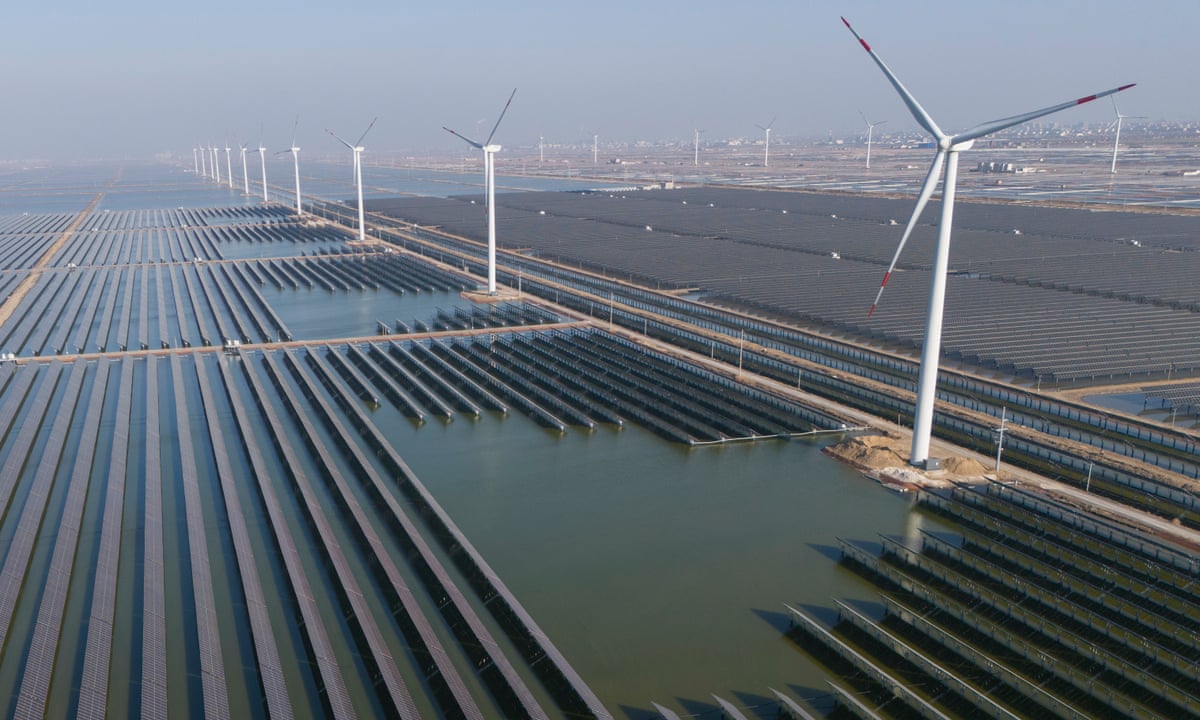
Green energy is a cornerstone of China’s strategy, coordinated with computing initiatives to support AI’s voracious power demands. The blueprint emphasizes expanding wind, solar, and battery capacities, where China already dominates globally—building two-thirds of the world’s projects. This “tremendous” energy growth, as described by analysts, positions Beijing ahead in the AI race, where energy access is pivotal.
In 2025 alone, China added more power generation capacity than the entire US grid. The plan accelerates installations under the current five-year framework, potentially hitting 2030 renewable targets early. Dominance in rare earths, magnets, and critical metals further bolsters self-sufficiency, reducing dependence on imports and granting geopolitical leverage.
This synergy—pairing green power with AI data centers—addresses sustainability while fueling tech growth. As US firms grapple with grid constraints, China’s rapid buildout could decide the race.
Head-to-Head: How China Stacks Up Against the US
The US-China tech race is multifaceted, with America leading in semiconductors, AI talent, and innovation ecosystems. Washington’s “America’s AI Action Plan” calls for deregulation to maintain dominance, viewing AI as key to economic and security flourishing. Yet, China excels in applications, robotics, and infrastructure deployment in the Global South.
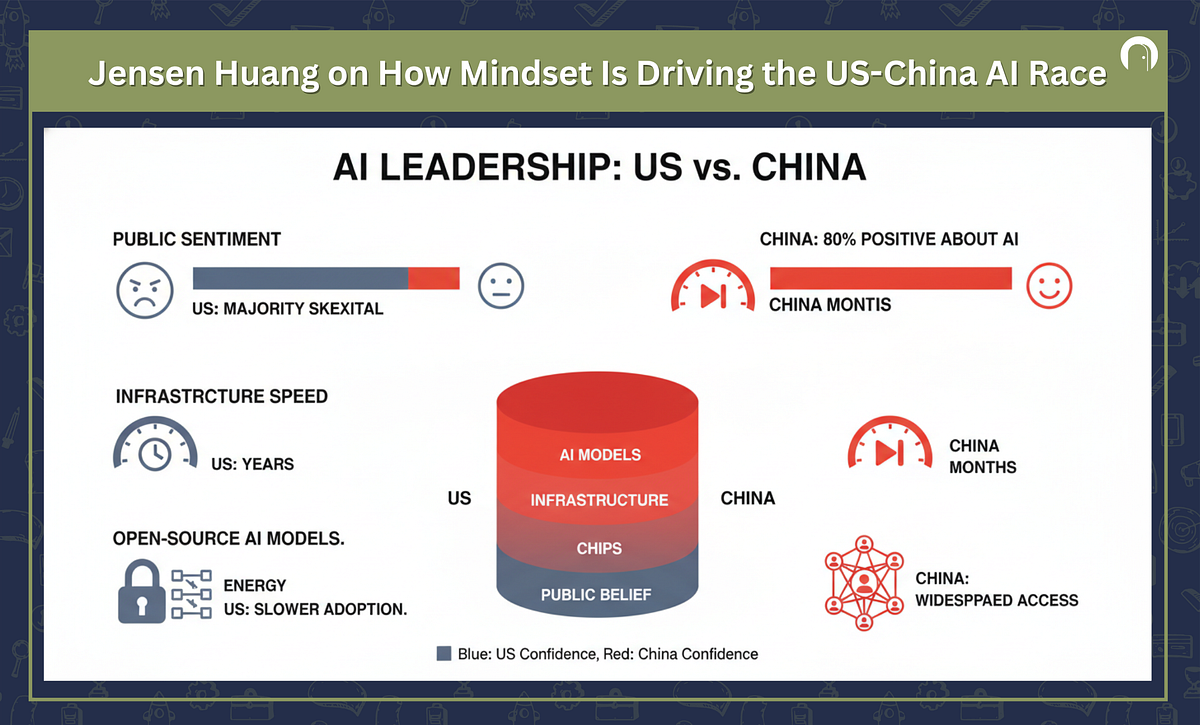
Energy disparities are stark: China’s buildup outpaces the US, potentially widening gaps in AI deployment. Public sentiment also differs—80% of Chinese view AI positively, versus US skepticism—impacting adoption speeds. As both nations pursue international partnerships, regions like Africa and Asia could become battlegrounds.
7 Key Strategies Driving China’s Tech Ascendancy
To break it down, here are seven pivotal strategies from China’s blueprint that could tip the scales:
1. Nationwide Computing Network Expansion
Building tiered facilities for AI processing, integrated with green energy sources.
2. AI+ Action Plan Implementation
Embedding AI in industries to address demographic shifts and boost GDP.
3. Space-Earth Quantum Networks
Developing secure, high-speed communications via satellites.
4. Accelerated Satellite Deployments
Rivaling Starlink with megaconstellations for global internet.
5. Green Energy Coordination
Linking renewables to AI data centers for sustainable power.
6. Breakthroughs in Emerging Tech
Investing in quantum, 6G, and fusion for long-term leads.
7. Self-Sufficiency in Critical Materials
Dominating rare earths and batteries to evade US sanctions.
Global Implications: From Cape Town to the World
This blueprint extends beyond borders, influencing global supply chains and alliances. In Africa, Chinese investments in green energy and space tech could enhance connectivity and sustainability, as seen in projects mirroring those in Cape Town’s renewable push. However, it raises concerns over data sovereignty and dependency. For businesses, opportunities abound in collaborations, but risks from escalating US-China tensions persist.
As AI reshapes industries, China’s integrated approach could accelerate adoption in developing regions, potentially shifting economic power eastward.
Looking Ahead: Challenges and Opportunities in the Tech Race
Despite strengths, China faces hurdles like talent shortages and US tech barriers. Innovation in open-source models and infrastructure speed could mitigate these, but geopolitical frictions may intensify. By 2030, experts predict China’s strategies could dominate practical AI applications, urging the US to adapt.
Conclusion: China’s Bold Vision Redefines the Future
China’s blueprint represents an ambitious leap forward, weaving AI, space internet, and green energy into a cohesive strategy to challenge US tech hegemony. With seven key strategies at its helm, Beijing is not just competing—it’s aiming to lead. As the world watches, this race will define innovation’s trajectory, urging balanced global cooperation amid rivalry.
Discover more from TECH-BRUNCH
Subscribe to get the latest posts sent to your email.