


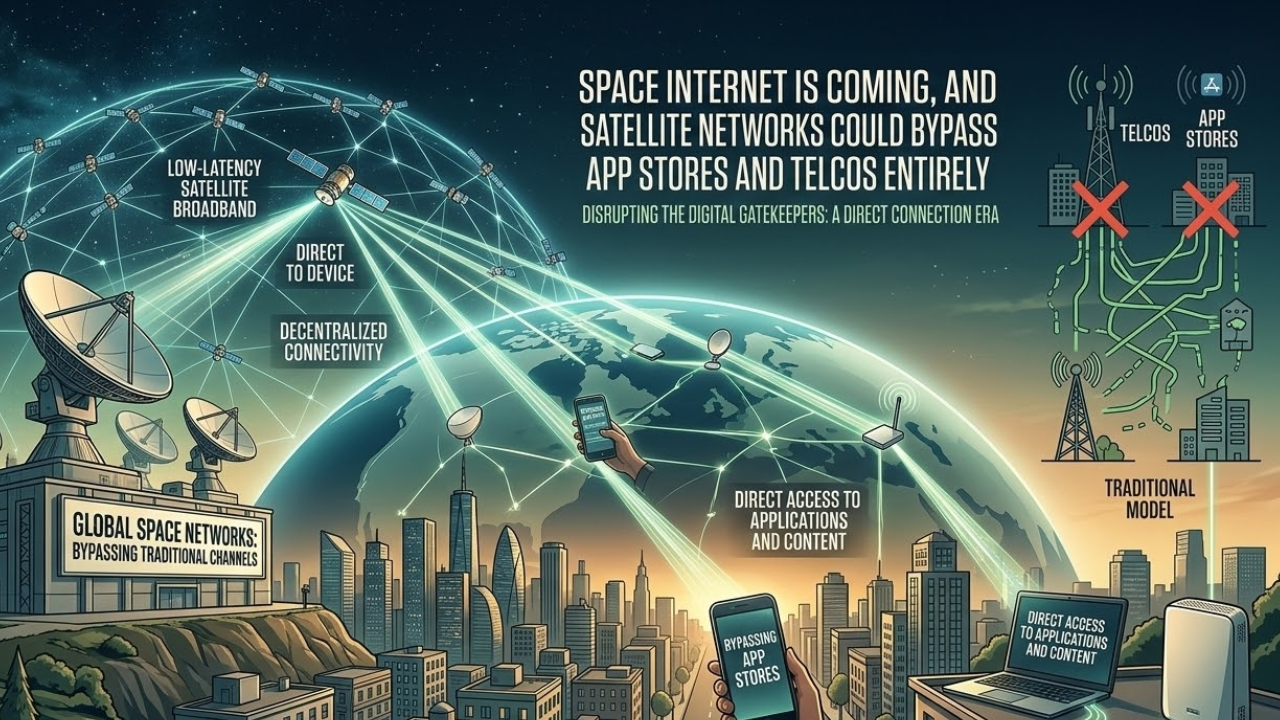
In the ever-evolving landscape of global connectivity, space internet is no longer a futuristic dream—it’s a rapidly unfolding reality that’s poised to reshape how we access the web. As of March 2026, satellite networks like Starlink are advancing at breakneck speed, raising intriguing questions about their potential to sidestep traditional gatekeepers such as telecommunications companies (telcos) and app stores. This development comes amid a surge in direct-to-device (D2D) technologies, where smartphones connect straight to orbiting satellites, bypassing ground-based infrastructure.
For users in remote areas or regions with unreliable networks, like parts of Cape Town’s outskirts in South Africa, this could mean unprecedented access to high-speed internet without relying on local providers. Backed by recent announcements from SpaceX and partnerships with tech giants, the shift promises to democratize data flow, but it also sparks debates on regulatory hurdles and market disruptions. As we delve into this transformative era, it’s clear that satellite internet isn’t just about closing the digital divide—it’s about redefining control over digital ecosystems.
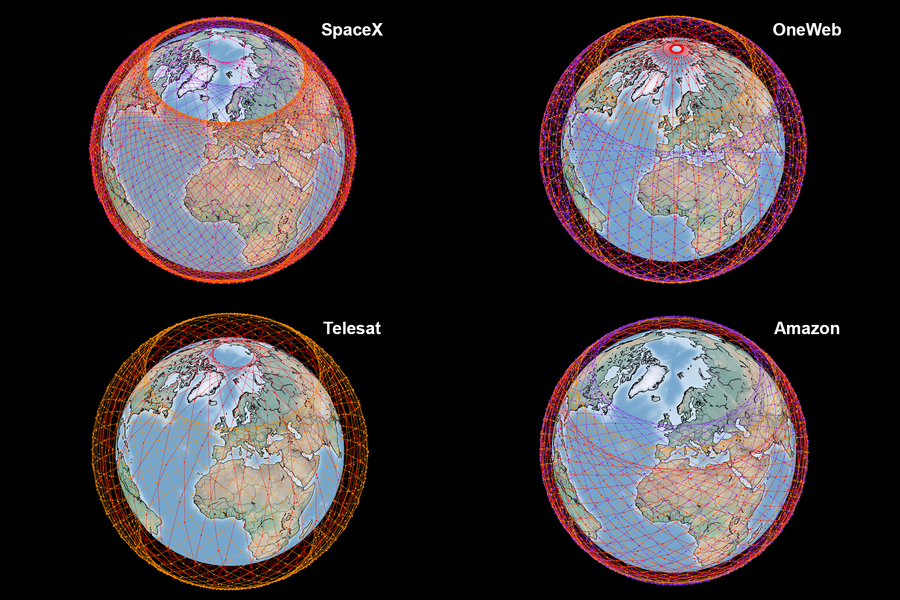
The buzz around space internet intensified with Elon Musk’s Starlink constellation, now boasting over 5,800 satellites in low Earth orbit (LEO). Recent FCC approvals have doubled Starlink’s authorized satellites to 15,000, enhancing coverage and enabling features like direct cellular connectivity. Meanwhile, competitors like Amazon’s Project Kuiper and China’s ambitious plans are accelerating the race, blending satellite tech with AI-driven systems for seamless global coverage. This isn’t merely an upgrade; it’s a potential paradigm shift where users might download apps or stream content without app store intermediaries or telco data plans.
Unpacking Space Internet: From Orbit to Your Device
Space internet refers to broadband delivered via satellite constellations orbiting at altitudes of 300-1,200 kilometers, far lower than traditional geostationary satellites. This LEO setup reduces latency to 10-100 milliseconds, making it viable for real-time applications like video calls and gaming. Key to the bypass narrative is direct-to-cell technology, where unmodified smartphones connect to satellites using standard LTE or 5G spectrum. For instance, Starlink’s integration with T-Mobile allows texts and data sessions without cell towers, as demonstrated in recent tests.
At its core, this technology leverages advanced phased-array antennas and custom silicon on satellites to overcome challenges like Doppler shift and low phone transmit power. Unlike conventional networks reliant on fiber optics and base stations, space internet beams signals directly from space, potentially rendering telcos’ infrastructure obsolete in underserved areas.
This decentralized approach echoes blockchain-inspired models, where connectivity isn’t funneled through centralized providers.
However, the bypass isn’t absolute. Many satellite operators, including SpaceX, are partnering with telcos rather than replacing them. For example, Starlink’s deal with Deutsche Telekom aims to launch direct-to-cell services by 2028, positioning satellites as a complement to existing networks. Yet, startups like Spacecoin are pushing for censorship-resistant, peer-to-peer internet that truly evades traditional channels.
Key Players in the Satellite Revolution
Leading the charge is SpaceX’s Starlink, which has evolved from rural broadband to a potential smartphone rival. Plans for a Starlink-connected mobile device could challenge incumbents like Apple and Samsung, integrating satellite internet natively. Apple, too, is exploring partnerships with SpaceX to bring 5G satellite internet to iPhones, starting with the iPhone 18 Pro series. This could enable global connectivity, from oceans to mountaintops, without app store dependencies for certain services.
Other contenders include OneWeb, with 632 orbiters partnering with telcos for B2B services, and Amazon’s Kuiper, planning thousands of satellites for low-latency broadband. In Asia, Huawei is enhancing satellite features for its devices, while China’s state-backed initiatives aim for a space-earth quantum network. Mergers like SES-Intelsat create mega-fleets to counter Starlink’s dominance.

These players are not just building networks; they’re forging ecosystems that could distribute apps via satellite, sidestepping Google Play or Apple’s App Store for niche or emergency services.
How Satellite Networks Could Bypass Telcos and App Stores
The core idea of bypassing telcos stems from D2D connectivity, where satellites act as orbiting cell towers. In tests, MTN transmitted data and mobile money transactions via satellites using standard smartphones, eliminating the need for ground infrastructure. This is particularly revolutionary for regions like Africa, where telcos like Safaricom face competition from Starlink’s kit-free access.
Regarding app stores, the bypass involves satellite-delivered content or apps that don’t require store approval. For example, decentralized apps (dApps) could be sideloaded via space internet, evading platform fees and censorship. However, experts argue this conflates connectivity with app runtime control—devices still run on OS ecosystems that enforce store policies. True bypass might emerge with open-source satellite protocols or Web3 integrations, like Spacecoin’s vision for uncensorable internet.
Challenges include spectrum allocation, where Apple and SpaceX compete for rights, and regulatory scrutiny over orbital congestion. Low power outputs and environmental concerns, such as light pollution from megaconstellations, also loom.
7 Disruptive Ways Satellite Networks Are Transforming Connectivity
To highlight the revolution, here are seven key ways satellite networks are bypassing traditional systems in 2026:
1. Direct-to-Device Connectivity Without Towers
Satellites enable smartphones to connect without cell towers, as seen in Starlink-T-Mobile integrations, reducing telco dependency in remote areas.
2. Censorship-Resistant Internet Access
Projects like Spacecoin offer low-cost, uncensorable broadband, bypassing government-controlled telcos in restricted regions.
3. Native Satellite Integration in Devices
Apple’s potential Starlink tie-up could embed satellite internet in iPhones, allowing app downloads without store intermediaries for emergency or global use.
4. Hybrid Networks for Seamless Roaming
Collaborations like AT&T-AST SpaceMobile blend satellite and terrestrial for uninterrupted service, gradually eroding pure telco models.
5. Decentralized App Distribution
Satellite beams could facilitate sideloaded apps, challenging app store monopolies by enabling direct developer-to-user channels.
6. Enhanced Disaster Relief and Mobility
In crises, satellites provide instant connectivity for mobile money and communications, as MTN’s tests show, bypassing damaged infrastructure.

7. AI-Powered Orbital Computing
Future systems might host AI edge computing in space, delivering processed data directly to devices without telco gateways.
Real-World Impacts: From Cape Town to Global Markets
In practical terms, this revolution hits home in places like Cape Town, where uneven internet access hampers economic growth. Satellite bypass could empower small businesses with reliable connectivity, fostering e-commerce without hefty telco fees. Globally, it threatens telcos’ revenue, with Starlink potentially destabilizing markets in developing nations. For consumers, it means lower costs and greater freedom, but for app stores, it could erode control over content distribution.
User feedback on platforms like X highlights excitement, with posts noting Starlink’s kit-free mobile access as a game-changer for African users. In healthcare and education, direct satellite links could stream resources to remote schools or clinics, bridging gaps in real time.
Challenges Ahead: Navigating the Orbital Frontier
Despite the hype, hurdles remain. Spectrum conflicts, as between Apple and Musk, could delay rollouts. Environmental impacts from thousands of satellites raise astronomy concerns, with megaconstellations potentially ruining night skies. Security risks, like hacking orbital networks, also demand robust encryption.
Regulatory bodies like the FCC are adapting, but international coordination is key to avoiding a cluttered orbit. As partnerships evolve, the line between bypass and collaboration blurs, suggesting a hybrid future.
The Future of Connectivity: A Sky Full of Possibilities
Looking to 2027 and beyond, satellite networks could integrate with 6G and quantum communications, making bypass more feasible. With China’s blueprint accelerating space internet, global competition will intensify. For users, this means a world where connectivity is as ubiquitous as air, free from traditional constraints.

Conclusion: Embracing the Disruptive Potential of Space Internet
The arrival of space internet marks a disruptive revolution, with satellite networks challenging the status quo of app stores and telcos. Through seven transformative ways, from direct connectivity to decentralized apps, this technology promises a more inclusive digital world. While challenges persist, the benefits—especially for underserved regions like Cape Town—outweigh the risks. As we hurtle toward this orbital era, staying informed is key to navigating the changes ahead.
Discover more from Tech-Brunch
Subscribe to get the latest posts sent to your email.


