Business leaders everywhere are racing to deploy AI agents in 2026, yet one question keeps them up at night: can they actually trust these autonomous systems with critical decisions? Gartner predicts that 40 percent of enterprise applications will embed task-specific AI agents by the end of this year, turning passive tools into proactive workflow partners. The stakes have never been higher. A single hallucination, security breach, or biased outcome can erode customer confidence, trigger regulatory fines, and cost millions in lost productivity.
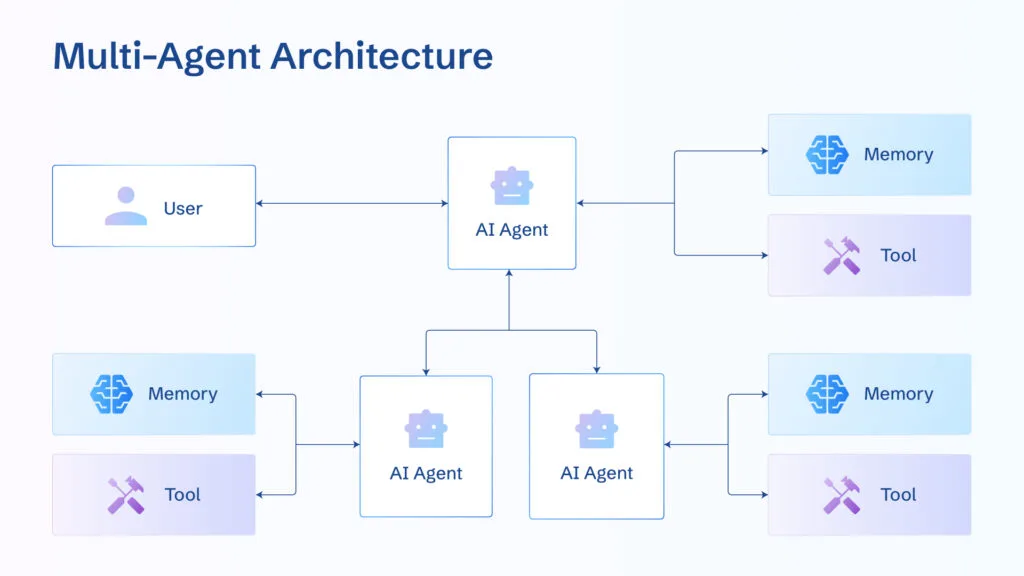
The good news? You don’t need to gamble. Forward-thinking companies are already building agents that deliver reliable results while earning genuine trust from teams and customers alike. By following four proven strategies drawn from real-world enterprise deployments, you can create AI agents that are not only powerful but also transparent, secure, and ethically sound. These game-changing tips will help your business move from experimentation to confident, scalable adoption—without the usual risks.
Why Trust Matters More Than Ever in 2026
AI agents have evolved far beyond simple chatbots. Today’s systems can reason, use tools, make decisions, and even coordinate with other agents across your entire tech stack. Yet this autonomy introduces new vulnerabilities: unpredictable behavior, data leaks, and opaque “black box” logic that no one can fully explain.
Regulations like the EU AI Act and evolving U.S. frameworks now demand accountability. Customers expect privacy-first experiences, while employees want assurance that agents won’t replace human judgment—they’ll enhance it. Organizations that ignore these realities face stalled rollouts, compliance headaches, and reputational damage. The winners, however, treat trust as a competitive advantage. They embed governance, security, and explainability from day one, turning potential liabilities into strengths that accelerate ROI.
Tip 1: Prioritize Explainability and Transparency to Eliminate the Black Box
The foundation of any trustworthy AI agent is the ability to show its work. When an agent books a client meeting, flags a fraud risk, or recommends a pricing adjustment, stakeholders need to understand exactly why. Without explainability, even the smartest system feels like a risky gamble.
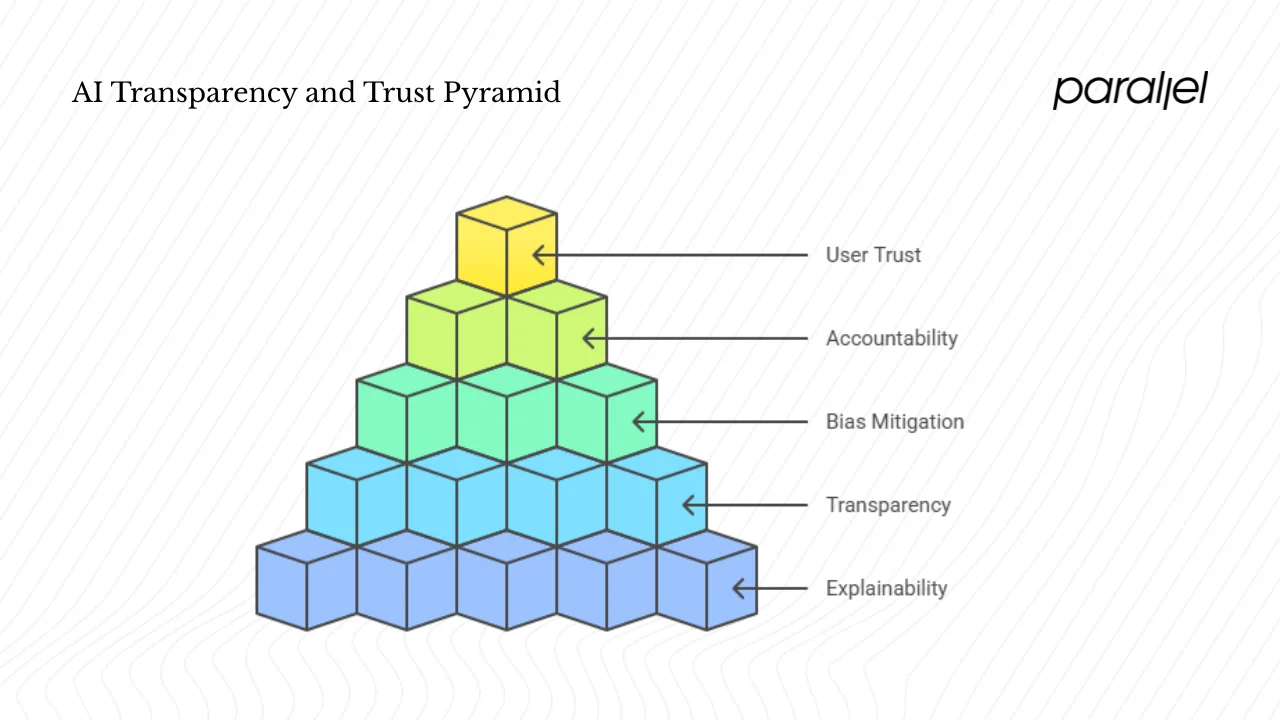
Start by designing agents with built-in reasoning logs that capture every step: the prompt, retrieved data, tool calls, and final decision. Modern frameworks make this straightforward—use topic classification to keep agents focused on specific tasks, dramatically reducing hallucinations. Salesforce, for instance, limits agent-generated emails and adds clear opt-out options so users always stay in control.
Implement layered transparency: surface high-level summaries for executives, detailed traces for engineers, and plain-language explanations for end users. Tools like audit logs and decision trees turn complex reasoning into readable reports. Companies following this approach report 30-50 percent higher adoption rates because teams finally understand—and therefore trust—the agent’s outputs.
Make explainability a non-negotiable requirement during prompt engineering and model selection. Test agents against edge cases and document every failure mode. The result? Agents that don’t just act—they justify their actions in ways that build lasting confidence across your organization.
Tip 2: Embed Robust Security and Privacy Controls from Day One
Security can no longer be an afterthought. AI agents often access sensitive data, external APIs, and internal systems, making them prime targets for attacks. In 2026, enterprises that treat agents like privileged users—complete with least-privilege access, encryption, and real-time policy enforcement—avoid the breaches that plague early adopters.
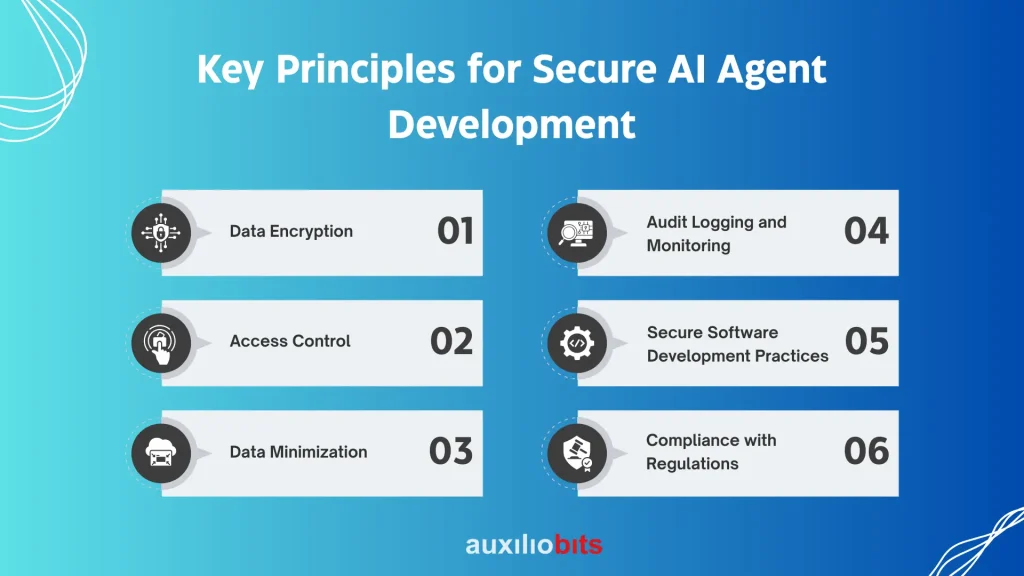
Follow a multi-layered approach. Begin with prompt filtering and response enforcement to block unsafe actions before they happen. Add data minimization so agents only see what they absolutely need. Encrypt everything in transit and at rest, enforce role-based access controls, and maintain comprehensive audit trails for every decision.
Leading platforms now include agent gateways that sit between the AI and your tools, scoring risk in real time and blocking anything outside approved boundaries. For regulated industries, integrate SOC 2, HIPAA, or PCI compliance checks automatically. Privacy features like user opt-outs and clear disclosure statements further strengthen trust with customers.
Businesses that bake these controls into the architecture from the prototype stage report fewer incidents and faster regulatory approvals. Security becomes the foundation that lets agents scale safely across departments without constant human supervision.
Tip 3: Implement Continuous Monitoring and Human Oversight for Rock-Solid Reliability
Even the best-designed agent needs ongoing vigilance. Drift in data, changing business rules, or unexpected edge cases can quickly erode performance. The most trusted agents combine automated monitoring with strategic human oversight that keeps systems reliable without slowing innovation.
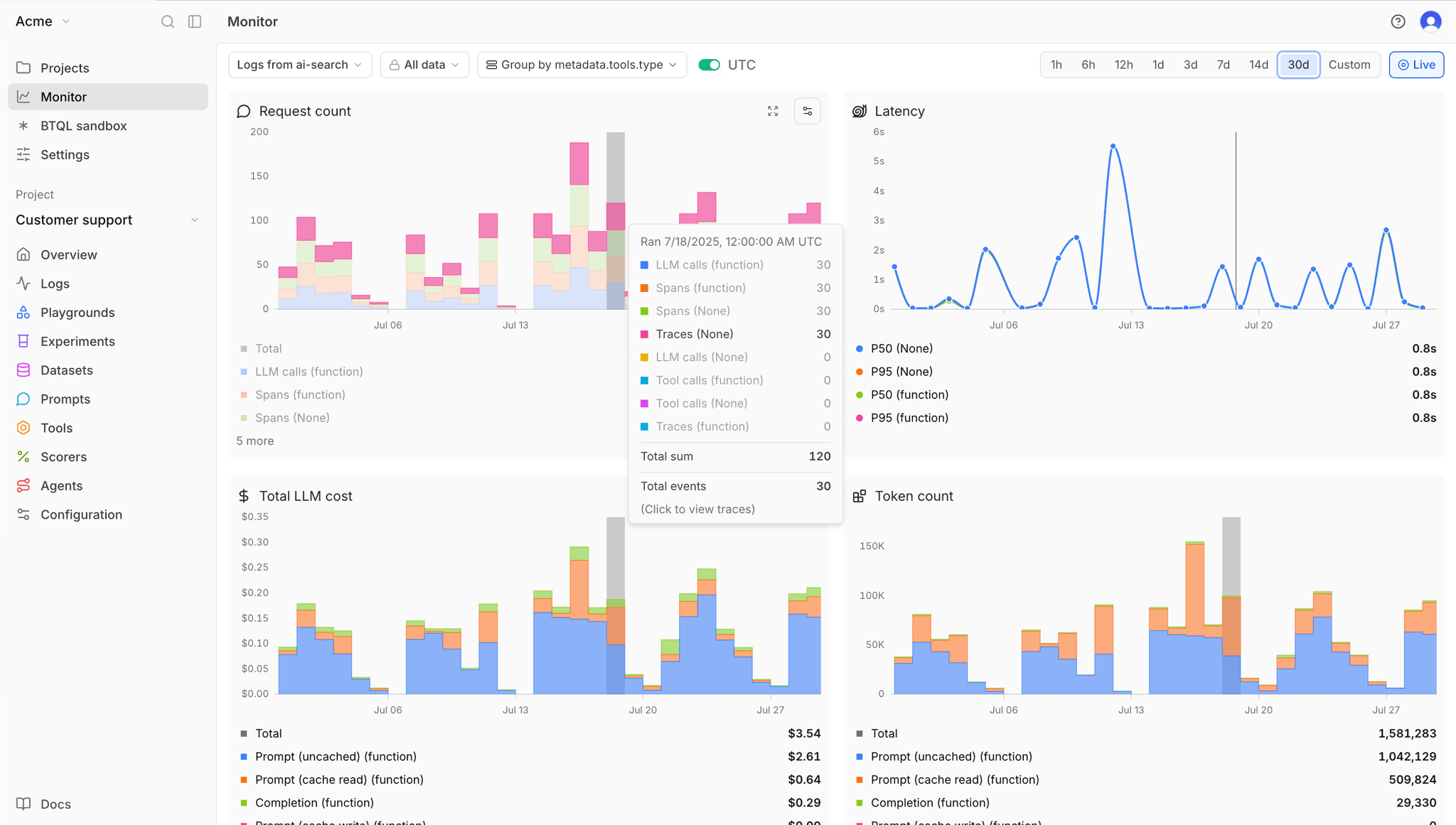
Deploy observability dashboards that track latency, token usage, error rates, and decision quality in real time. Set up automated alerts for anomalies and schedule regular audits that compare agent outputs against ground-truth results. Many organizations now use red-teaming exercises and feedback loops to retrain agents on new scenarios.
Build human-in-the-loop checkpoints for high-stakes actions—let the agent propose, but require approval for anything involving money, legal commitments, or customer data. This hybrid model boosts accuracy while preserving accountability. Over time, the agent learns from human corrections, becoming smarter and more aligned with your unique processes.
Companies following this monitoring-first mindset see sustained performance improvements and dramatically lower support tickets. Reliability stops being a hope and becomes a measurable, continuously improving reality.
Tip 4: Align AI Agents with Strong Ethical Governance Frameworks
Trust ultimately rests on values. Agents that operate ethically—avoiding bias, respecting privacy, and staying within clear boundaries—earn loyalty from both employees and customers. In 2026, governance is no longer optional; it’s the difference between an agent that scales and one that gets shut down.
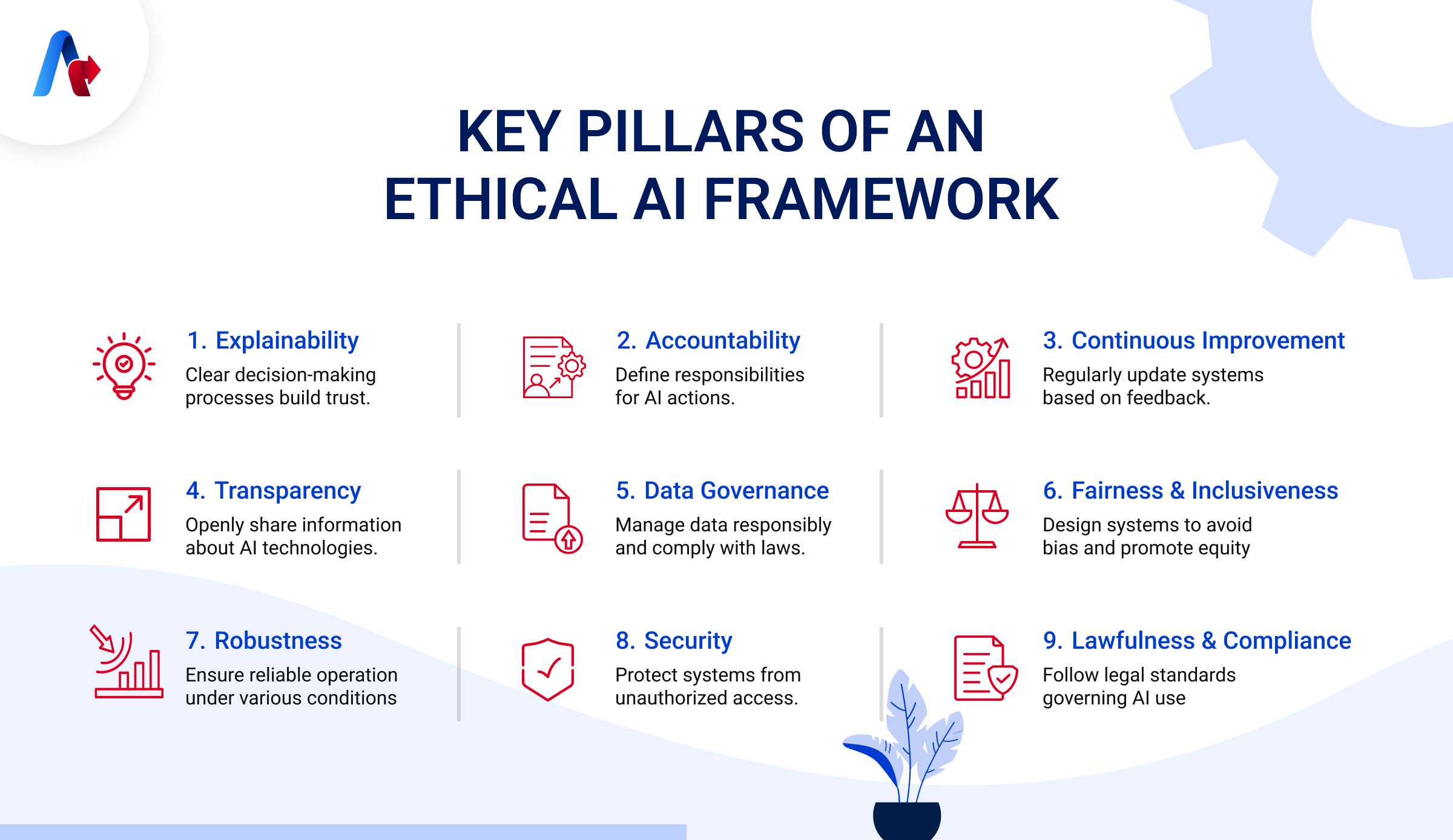
Create a cross-functional AI governance committee that includes legal, ethics, security, and business leaders. Define clear principles: fairness, accountability, robustness, and lawfulness. Map every agent to these pillars using frameworks like NIST AI RMF or ISO 42001. Document responsibilities so every decision has an owner.
Regularly audit for bias and update training data to reflect diverse real-world scenarios. Provide employees with training on how to collaborate with agents responsibly. Most importantly, establish override mechanisms and escalation paths so humans always retain final authority when needed.
Organizations that treat governance as a strategic enabler—rather than a checkbox—report stronger brand reputation, smoother regulatory compliance, and higher employee satisfaction. Ethical agents don’t just work; they reflect your company’s values in every interaction.
Head-to-Head: Trusted AI Agents vs. Risky Experiments
| Aspect | Risky AI Agents | Trusted AI Agents (2026 Best Practice) |
|---|---|---|
| Explainability | Black-box decisions | Full reasoning logs and summaries |
| Security | Broad access, no filters | Least-privilege + real-time gateways |
| Monitoring | Set-and-forget | Continuous dashboards + alerts |
| Governance | Ad-hoc ethics | Formal framework with audits |
| Business Outcome | Frequent failures, low adoption | High ROI, regulatory confidence |
The contrast is stark. Trusted agents consistently deliver measurable value while minimizing downside risk.
Real-World Results Speak Louder Than Theory
Enterprises already applying these four tips are seeing transformative outcomes. One global retailer reduced manual order processing by 70 percent after deploying explainable, monitored agents with strict privacy controls. A financial services firm cut compliance review time in half by embedding governance and human oversight from launch. Even smaller businesses report faster scaling once trust barriers disappear.
The common thread? They didn’t chase raw capability—they built agents their teams could actually rely on day after day.
Getting Started: Your 30-Day Action Plan
Week 1: Define clear use cases and assemble your governance team. Week 2: Prototype with explainability and security baked in. Week 3: Add monitoring dashboards and human checkpoints. Week 4: Conduct an ethical audit and gather initial user feedback.
Start small, measure everything, and iterate quickly. The tools and frameworks available in 2026 make this roadmap easier than ever.
Final Thoughts: Trust Is Your Ultimate Competitive Edge
The four game-changing tips—explainability, security, continuous monitoring, and ethical governance—transform AI agents from experimental novelties into trusted business assets. When your agents are transparent, secure, reliable, and values-aligned, adoption soars, risks plummet, and ROI multiplies.
In 2026, every company will have access to powerful AI technology. The ones that win will be those whose agents earn genuine trust from the people who use them. Don’t settle for flashy demos. Build better AI agents that your business can actually trust—and watch your entire organization thrive.
Ready to take the first step? Assemble your team, pick one focused use case, and apply these tips today. The future of autonomous work isn’t coming—it’s already here, and the most trustworthy agents will lead the way.
Discover more from TECH-BRUNCH
Subscribe to get the latest posts sent to your email.