Alphabet’s $80 billion capital raise which includes a $10 billion Warren Buffett’s Berkshire Hathaway bet ranks among the biggest tech infrastructure investments ever. So, what’s the deal, why is AI demand outstripping supply, and what does it mean for ordinary tech users and investors in 2026? Alphabet will raise $80 billion by way of strategic stock sales to expand its AI data centers and physical compute infrastructure.
Berkshire Hathaway has agreed to invest $10 billion through a private placement at a discounted price comprising two different share classes. Google’s parent company is scrambling to build more data centers as AI demand far exceeds its current capacity. Here’s what the big deal looks like and why the whole tech industry is watching.
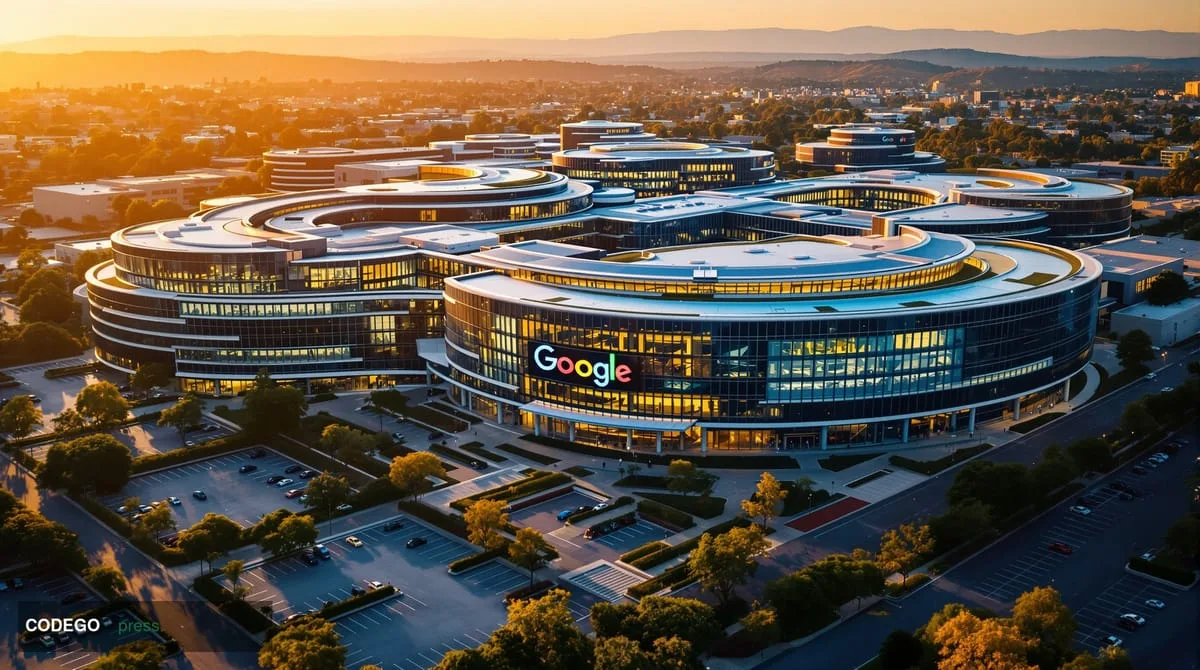
Inside Alphabet’s $80 Billion War Chest:
Alphabet is not collecting this money all at once. Instead, they are pulling three financial levers concurrently to protect the stock from an unexpected price shock. Firstly, Wall Street is dealing with a $30 billion underwritten offering. It is divided equally into $15 billion of common stock and $15 billion of preferred stock that converts into regular shares at a later date. Google’s parent company is planning to almost double its capital expenditure from one year to the next, aiming at $175185 billion in 2026.
This historic spending spree will literally change the way AI tools in Google Search, YouTube, and Gmail work, their price, and their availability. Alphabet just rolled out a $80 billion capital raise for AI. Warren Buffett is joining the ride with a $10 billion bet.
Secondly, a $40 billion At-the-Market program will be started in Q3 2026. Alphabet will be issuing those shares little by little to the open market over time. Spreading out the equity giving prevents a sudden stock dumping, helps in maintaining the share price from undergoing heavy downward pressure.
Why Warren Buffett is Picking up the Google Discount
Warren Buffett’s company split its $10 billion pledge fifty-fifty between two different types of shares.
- $5 billion in Class A ordinary shares at $351.81 each
- $5 billion in Class C capital shares at $348.20 each
Both these entry levels are lower than Alphabet’s closing price on the day of the deal. This fast-dating discount gave Berkshire a built-in upside even before the deal was finalized. This move Much increases an existing bet. Berkshire had already revealed that it owns $4.3 billion worth of Alphabet shares as at Q3 2025. That holding was its tenth largest among its equity investments. This fresh capital infusion hugely increases Buffett’s stake in Mountain View. The Price of Google’s AI Delivery Problem:
Google’s problem is a bit different:
there are many users but the company lacks enough computing power. In its official documents, Alphabet acknowledged that the need for its AI tools is currently exceeding the capacities of its existing systems. The proposed $80 billion capital increase resembles a rescue fund to establish more data centers, purchase high-tech servers, and expand US computing power. This is not for remote future projects; it is a sheer attempt to cope with the actual customers of Google.
Almost listing the possibility of a budget expansion in that short period, corporate history can hardly provide any other example of such an aggressive move. Alphabet even gave a heads-up to Wall Street on this in February 2026, stating spending must explode to close the gap between software demand and hardware supply.
Why Silicon Valley is Focusing on Cash, Not Code:
It is no secret that one of the characteristics of Warren Buffett is that he usually stays away from tech companies. That means, Berkshire’s $10 billion investment is a very strong sign. To me, it talks about how the ever-expanding network of data centers that Alphabet has built is seen by Buffett as not only a moat but the kind of traditional and enduring business that Warren Buffett so appreciates.
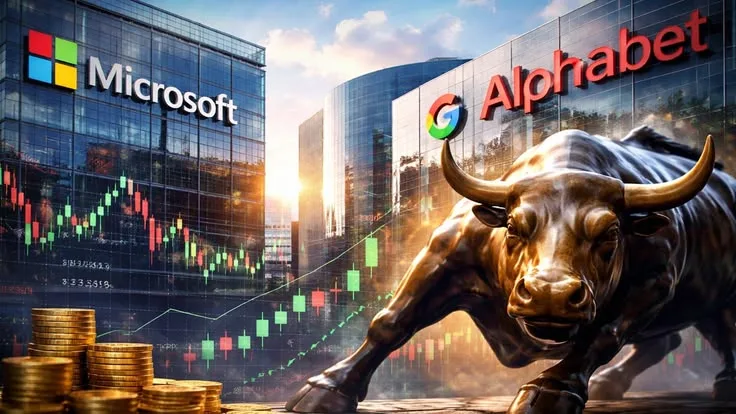
Such a deal also changes the focus of the Silicon Valley area. Although the latest AI race is centered around the chatbot with the smartest capabilities, Alphabet’s huge investment reveals that hardware is the real limiting factor. Winning this type of race calls for having sufficient physical resources and not just writing clever codes. At the same time, Alphabet is giving a clear message to its competitors. Microsoft, Meta, and Amazon are already recording the highest levels of spending on infrastructure in history.
How will it affect your Gmail, YouTube, and Google Search?
Withdrawing your attention from an $80 billion corporate raise as mere abstract noise is one thing, but you should have in mind that this extensive investment will have a direct impact on the tools you interact with regularly. Picture your typical day. AI-generated summaries are displayed as a direct response to your Google Search, a Gmail feature drafts your notes on the go, and YouTube depends heavily on computing resources for functions like audio translation or video recommendation.
Behind every AI query lies astronomical computational costs, which are many times higher in energy and money than serving traditional web links. Through significant investments in physical hardware, Alphabet is battling to maintain the speed and reliability of these features.
When Alphabet is not prompt enough in the construction progress, the resulting inconveniences will be felt. Gemini could be the reason for workspace apps running slow, or as a preventive measure, Google might be limiting the number of AI search answers. Also, because of the high operating costs, even basic access to advanced features might be put behind premium paywalls. However, a well-done deployment means that your most-used free tools will be upgraded in a jiffy.
It ultimately comes down to who is in a position to supply billions of users with superfast digital tools for free.
What Investors Should Be Aware Of The current wave of infrastructure investment is a double-edged sword for anyone who owns GOOG or GOOGL shares.
The Challenges:
Issues of equity dilution leading to a drop in stock prices at least soon are most of the time connected to raising $80 billion new stocks. Besides, investing $185 billion in data centers will be quite a heavy blow to near-term earnings. Also, there is no indication from Wall Street when this type of hardware will become a source of clear profits.
The Advantage:
First, the more enterprise AI adoption grows, the more the ownership of the infrastructure supporting this growth will be a major competitive advantage. The company that makes the physical hardware is in control of the keys to the whole AI economy. Secondly, analysts keep a close eye on how well Alphabet manages to transform these cost increases into high-margin revenue. Finally, Google Cloud will probably be the main focus as this business segment is still the fastest growing for the company.
The Long and Short of It:
Alphabet’s huge fundraising is a clear indication that a major change is coming. The AI race is not only about software optimization anymore, it has turned into being a battle with physical scale as the main weapon. Berkshire Hathaway’s $10 billion backing brings the play a lot of institutional credibility.
Because of this, while it is true that short-term dilution and earnings pressure may scare investors, Then again, the very large amount of consumer and corporate demand that is fueling this spending is equally undeniable.
Discover more from TECH-BRUNCH
Subscribe to get the latest posts sent to your email.