


The United States continues pouring hundreds of billions into the elusive pursuit of artificial general intelligence (AGI), while China focuses relentlessly on widespread deployment, efficiency, and real-world integration. This divergence raises a critical question: Is America chasing an ill-defined myth at the expense of tangible economic gains, as China quietly builds the AI-powered future?

Recent analyses highlight this strategic split. The US maintains a lead in frontier model capabilities and massive compute infrastructure, yet China excels in rapid adoption, open-source diffusion, and embedding AI across manufacturing, logistics, and industry. With hyper scalers like Microsoft, Google, Amazon, and Meta planning $650 billion in AI spending for 2026 alone, America bets heavily on scaling toward human-level intelligence. China, constrained by export controls yet innovative in efficiency, prioritizes practical outcomes that drive immediate productivity and economic resilience.
This article explores the diverging paths, current realities in 2026, and what it means for the future of innovation, jobs, and geopolitical power. Far from a simple “race,” the two nations run parallel tracks with different finish lines—one speculative, one grounded in deployment.
The US Obsession with AGI: Billions Chasing an Elusive Goal
America’s AI strategy centres on achieving AGI—systems that match or surpass human cognitive abilities across most tasks. Tech leaders and policymakers frame it as existential: the first to AGI wins decisive economic and military advantages.
Hyper scalers are building gigawatt-scale data centres and deploying hundreds of thousands of advanced accelerators. Microsoft alone spent around $80 billion on AI capital expenditures in 2025, with collective Big Tech plans reaching staggering sums. Projects like Open AI’s Stargate envision hundreds of billions more in infrastructure.
Yet critics argue AGI remains vaguely defined and potentially unattainable in the singular, transformative sense often promised. Benchmarks advance, but real-world reliability in complex, unstructured environments lags. The risk? Massive investment yields cutting-edge models that fail to translate into broad economic productivity if adoption and integration lag.
US strengths shine in raw performance. Top models from Open AI, Anthropic, and Google DeepMind lead benchmarks in reasoning, coding, and agentic tasks. Talent pools and private capital fuel frontier research. However, questions mount about whether this compute-heavy path delivers proportional returns or risks a speculative bubble.

China’s Different Playbook: Efficiency, Deployment, and Industrial Integration
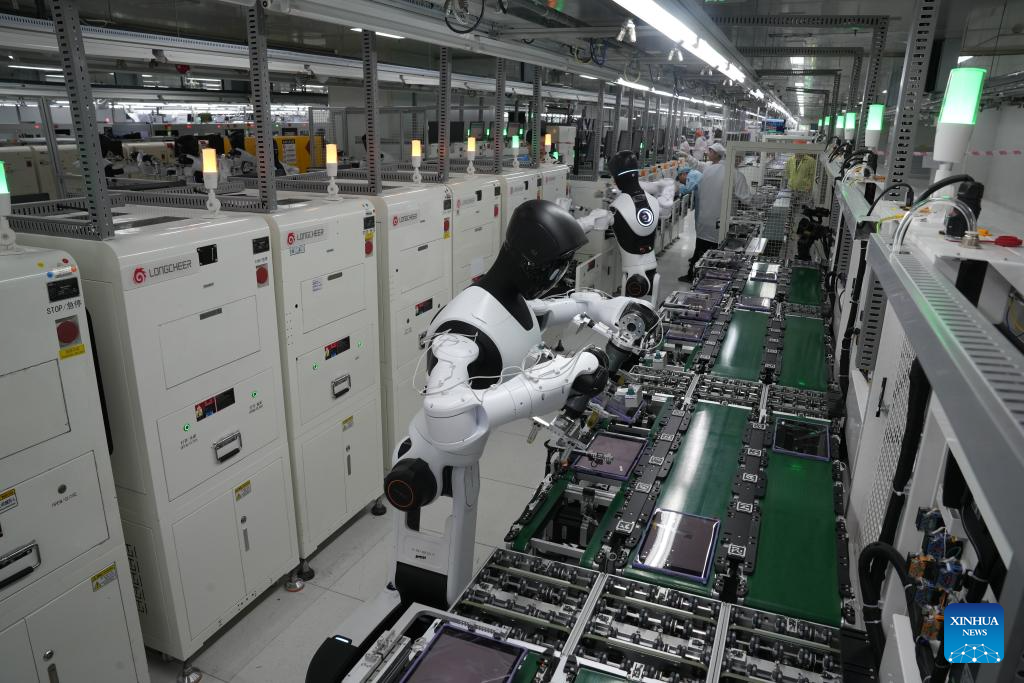
China pursues multiple “AI races” simultaneously. While some labs explore AGI paths, national policy and industry emphasize efficiency gains, rapid adoption, and physical-world integration—often called “embodied AI” or “AI + Manufacturing.”
Despite US export controls limiting access to the latest Nvidia chips, Chinese developers close gaps through smarter architectures, model distillation, and domestic hardware. Start ups like Deep Seek stunned the world with efficient, high-performing open models that achieve near-frontier results at lower cost. In April 2026, Deep Seek unveiled its V4 model, optimized for Huawei’s Ascend chips, marking a leap in tech self-reliance.
Beijing’s “AI Plus” initiatives and the latest five-year plan push integration into manufacturing, education, healthcare, and smart cities. China leads globally in industrial robot deployment and AI patents in many applied domains. Open-source strategies accelerate diffusion: models from Deep Seek, Alibaba’s Qwen series, and others spread rapidly, lowering barriers for businesses and developers.
This constraint-driven approach fosters innovation in areas where the US has abundance. Chinese AI often prioritizes cost-effectiveness and scalability, enabling faster embedding into factories, logistics, and consumer applications. Result? Tangible productivity boosts today rather than promised breakthroughs tomorrow.

Head-to-Head: Compute, Models, and Real-World Impact in 2026
The US holds clear advantages in raw compute scale and frontier model performance. American systems often outperform Chinese counterparts by margins in math, coding, and complex reasoning benchmarks. Data centres reach unprecedented sizes, powered by massive private investment.
China counters with speed of deployment and efficiency. Models like DeepSeek-V4 run effectively on domestic hardware, reducing reliance on restricted imports. Widespread integration means AI already influences daily operations in Chinese factories and supply chains. Embodied AI—robots and autonomous systems—advances faster in practical settings.
Open-source momentum gives China another edge. Affordable, capable models democratize access, spurring innovation across thousands of smaller firms and sectors. In contrast, many top US models remain closed or expensive, limiting broad diffusion.
Analysts note the contest spans multiple dimensions: the US leads at the technological frontier, but China gains ground in adoption, integration, and economic translation. The true winner may be whoever turns powerful tools into systemic, broad-based gains.
Risks of the AGI Focus: Opportunity Cost and Strategic Blind Spots
Critics warn that America’s AGI-centric strategy carries risks. Heavy bets on speculative scaling could divert resources from practical applications, workforce training, and infrastructure that deliver near-term returns. If AGI timelines slip—or if the technology delivers incremental rather than revolutionary change—massive investments might yield diminishing returns.
Geopolitical tensions add complexity. Export controls aim to slow China’s progress but also spur Beijing’s self-reliance drive, potentially accelerating domestic innovation in chips and algorithms. Over-reliance on a few hyper scalers concentrates power and raises questions about equitable benefits across society.
Energy demands of massive data centres pose sustainability challenges, while labour market disruptions from advanced AI require proactive policies—areas where deployment-focused strategies may offer earlier lessons.
China faces its own hurdles, including compute constraints and quality gaps in certain frontier tasks. Yet its pragmatic approach mitigates some risks by delivering value incrementally and building resilient ecosystems.

Pathways Forward: Lessons from Diverging Strategies
For the US, balancing frontier research with aggressive adoption could maximize returns. Complementing compute investments with policies that encourage diffusion, workforce upskilling, and sectoral integration would help translate leadership into widespread prosperity.
China’s model demonstrates the power of state-supported application and efficiency focus. Its success with open models and industrial AI offers a blueprint for turning technology into competitive advantage without waiting for perfect general intelligence.
Globally, the AI future likely blends both approaches. Collaboration in non-sensitive areas, alongside healthy competition, could accelerate safe, beneficial development. Nations watching the US-China dynamic may hybridize strategies—pursuing excellence at the frontier while prioritizing practical impact.
What This Means for Businesses, Workers, and Global Leadership
Businesses in both nations—and worldwide—must navigate this split. US firms excel at ground breaking tools; Chinese ecosystems offer scalable, cost-effective deployment models. Smart strategies will combine the best of both: cutting-edge capabilities with rapid, practical integration.
For workers, AI transformation demands reskilling toward roles that leverage human strengths alongside intelligent systems. Deployment-focused approaches may create more immediate opportunities in applied fields like robotics, smart manufacturing, and AI-enhanced services.
Geopolitically, the contest influences supply chains, standards, and influence. Success will hinge less on who claims AGI first and more on who builds resilient, productive AI economies that benefit citizens broadly.
Embracing a Balanced, Deployment-Driven AI Future
The narrative of a singular “AGI race” oversimplifies a complex reality. America’s bold investments push boundaries and maintain technological edge, yet China’s grounded strategy delivers measurable progress today through efficiency, integration, and scale.
As 2026 unfolds, with Deep Seek’s latest advances on Huawei hardware and US hyper scalers scaling infrastructure, the wiser path may blend ambition with pragmatism. Chasing an undefined myth risks distraction; building the AI future through widespread, responsible deployment promises tangible gains for economies and societies.
The real competition is not merely who builds the smartest model, but who most effectively weaves intelligence into the fabric of daily life and industry. In that broader contest, both nations—and the world—stand to gain from learning across strategic differences.
Ultimately, the AI era rewards adaptability, collaboration where possible, and a clear focus on human-centred outcomes. Whether through frontier breakthroughs or practical mastery, the technology’s greatest promise lies in elevating productivity, solving real problems, and creating shared prosperity.
Relevant Quotes:
- “The real danger for America is not ‘losing the AGI race.’ It is winning on speculative breakthroughs while falling behind in the practical, economy-wide application of AI.” – Analysis from Asia Times on diverging strategies.
- “China is pursuing a different approach to AI… focused on making progress in model efficiency, AI adoption, and the integration of AI into the physical world.” – Brookings Institution report on competing strategies.
- “The US leads in model capability, while China leads in widespread deployment. This difference demonstrates that there is more than one vision of success in the AI industry.” – AI Frontiers commentary on parallel races.
Discover more from Tech-Brunch
Subscribe to get the latest posts sent to your email.


