

In an era where technology education meets space exploration head-on, the NASA Artemis 2.0 Smartwatch stands out as a true breakthrough for young minds eager to dive into coding. Launched in perfect sync with NASA’s historic Artemis II crewed lunar flyby mission on April 1, 2026, this $129 programmable wearable from Circuit Mess isn’t just another gadget—it’s a fully functional smartwatch that runs real Python code right on your wrist. Designed for kids aged 9 and up, it transforms everyday wearables into powerful learning tools, letting children design custom apps, games, and watch faces while exploring STEM concepts inspired by NASA’s journey back to the Moon.
South African parents and educators searching for engaging tech gifts will find this device particularly compelling. With load shedding and remote learning still shaping daily life, the Artemis 2.0 offers offline coding adventures that build real skills without constant internet reliance. Its open-source firmware, Bluetooth connectivity, and suite of sensors make it far more than a toy—it’s a gateway to future careers in software engineering, aerospace, and innovation.
Priced accessibly and shipping worldwide with free delivery on qualifying orders, this smartwatch proves that powerful coding experiences don’t require expensive labs or complex setups.

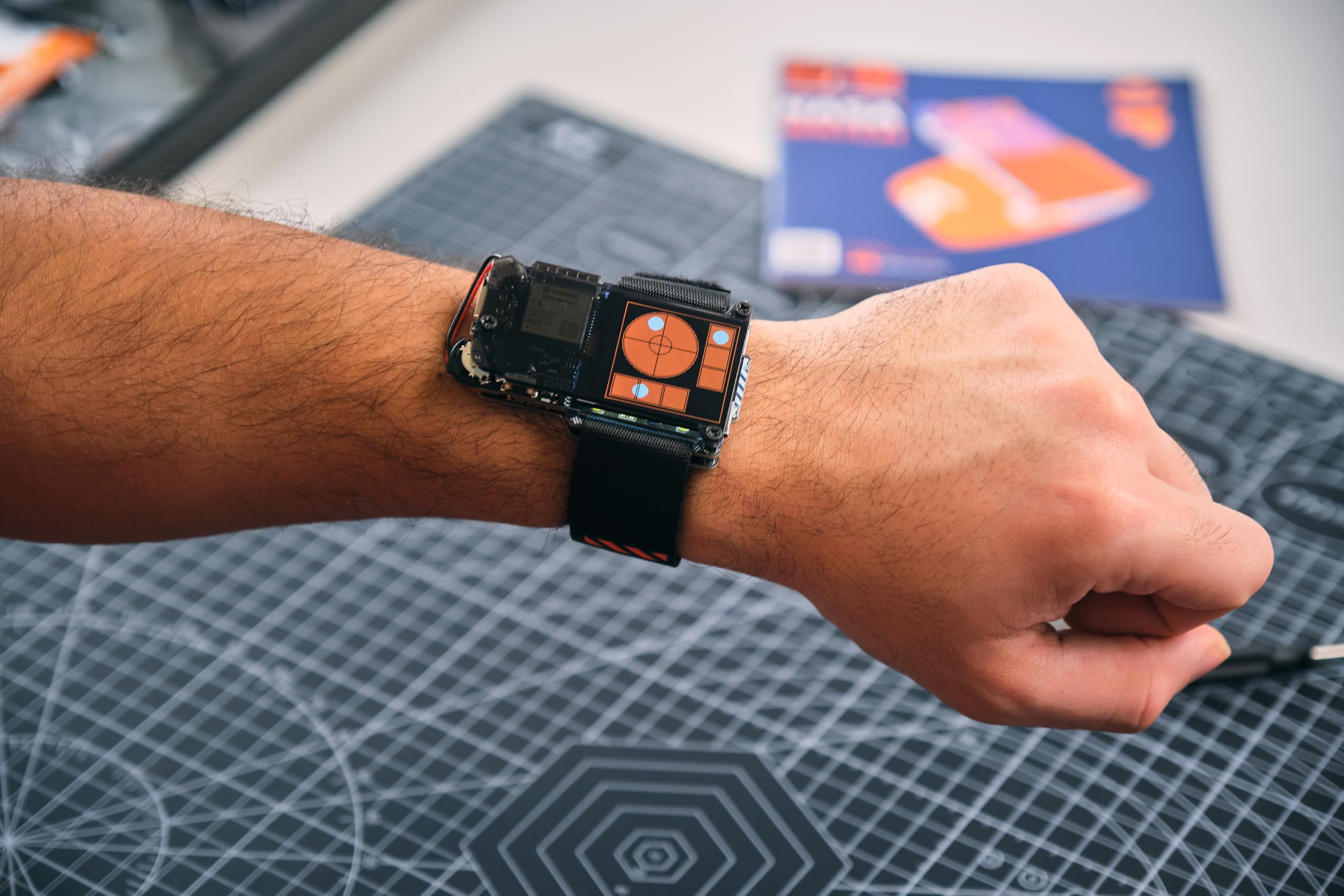
As NASA astronauts Reid Wiseman, Victor Glover, Christina Koch, and Jeremy Hansen orbit toward the Moon, kids back on Earth can mirror that spirit of discovery by programming their own wearable. The Artemis 2.0 ships fully assembled and ready to wear after a quick USB-C charge, eliminating the frustration of traditional DIY kits. Its compact design—measuring just 1.77 x 0.5 x 2.76 inches—fits comfortably on small wrists while packing serious hardware under a transparent case that proudly displays the inner circuitry, evoking retro sci-fi charm reminiscent of classic space tech.
Why the NASA Artemis 2.0 Smartwatch Matters More Than Ever for Young Coders
The timing could not be better. With Artemis II marking humanity’s return to lunar exploration after decades, Circuit Mess has created a device that brings that excitement directly to children’s wrists. Unlike locked-down kids’ smartwatches that limit interaction to basic notifications, the Artemis 2.0 flips the script entirely. It empowers users to modify everything from sensor behaviour to the user interface, fostering genuine creativity and problem-solving skills.
Circuit Mess, a company that has already shipped over 300,000 STEM kits globally, designed this watch to grow with the child. Beginners start with simple drag-and-drop tools, while older kids and teens progress to writing actual Python scripts that pull live data from the device’s sensors. This progressive learning path mirrors real-world developer journeys and prepares users for advanced studies in computer science. In South Africa, where digital skills are increasingly vital for economic growth, such accessible tools can bridge gaps in traditional education and inspire the next generation of innovators.
Experts praise its approach. “The Artemis Watch 2.0 flips the entire model of kids’ smartwatches by making programming happen right on your wrist instead of treating it as something that happens elsewhere,” notes a leading tech reviewer. This hands-on philosophy turns passive screen time into active creation, building confidence and technical literacy from an early age.
That Make the NASA Artemis 2.0 Smartwatch Unforgettable
1. Native Python Support for Real-World Scripting on Your Wrist
At the heart of the Artemis 2.0 lies full Python compatibility, allowing kids to write genuine scripts that run directly on the device. No cloud dependencies or watered-down environments here—users can create variables, loops, and functions to control everything from custom animations to sensor-driven alerts. Imagine a child programming the watch to log temperature changes during a school outing or trigger a buzzer when the compass detects north. This feature alone elevates the watch from toy to serious educational tool, introducing coding concepts that transfer seamlessly to laptops and future careers.
2. Multi-Level Coding Paths: From Blocks to Arduino IDE
The watch supports three seamless progression levels, ensuring accessibility for every skill stage. Total beginners use Circuit Blocks, a visual drag-and-drop interface that feels like building with digital Lego. Intermediate users graduate to Python for script writing and variable manipulation, while advanced tinkerers unlock the full Arduino IDE for low-level hardware control. This built-in ladder removes intimidation and keeps learners engaged as they master increasingly complex projects, such as interactive games that respond to wrist movements.
3. Advanced Sensor Suite for Hands-On Data Exploration
Equipped with an accelerometer, gyroscope, compass, and temperature sensor, the Artemis 2.0 turns the real world into a living laboratory. Kids can code projects that track steps during a hike, detect orientation changes for motion games, or monitor environmental conditions in their backyard. The dual-core ESP32 processor handles real-time data processing effortlessly, making complex interactions feel intuitive. These sensors don’t just collect information—they become building blocks for creative apps that teach physics, math, and environmental science in practical ways.
4. Customizable Watch Faces and Interactive Apps Galore
Forget boring default displays. The full-colour LCD screen lets users design vibrant watch faces, complete with animations and NASA-themed graphics. Beyond aesthetics, the open-source firmware enables creation of full interactive apps and games that run natively on the watch. Build a simple rover controller, a fitness tracker with custom metrics, or even a mini adventure game—all coded and tested on the wrist itself. This level of personalization sparks imagination while reinforcing core programming principles.

5. Seamless Bluetooth Connectivity for Smart Notifications and Tracking
Pairing effortlessly with iOS and Android devices via Bluetooth, the watch receives notifications, tracks basic activity, and even sends commands to compatible kits like the Perseverance Rover bundle. This connectivity bridges the gap between wearable and smartphone without compromising the standalone coding experience. Parents appreciate the balance—kids stay connected safely while focusing primarily on creation rather than endless scrolling.
6. Durable, NASA-Inspired Transparent Design Built for Adventure
The retro-futuristic transparent housing proudly showcases the internal circuitry, inviting curious minds to understand how technology works from the inside out. Swappable colourful straps—including official NASA designs in Mars Red, Starlight, Stellar Blue, and Violet Supernova—add style and durability for active kids. With a rechargeable Li-Po battery and USB-C charging, the watch withstands daily wear while maintaining that iconic space-exploration aesthetic.
7. Exclusive Bundles That Extend Learning Beyond the Wrist
Choose the standalone watch or upgrade to the Collector’s Bundle ($149) with four premium straps or the Mars Exploration Bundle ($399) that pairs it with a buildable Perseverance Rover kit. The latter allows the watch to control the rover via Bluetooth, creating an end-to-end space mission experience. These bundles offer exceptional value and turn a single purchase into a complete STEM ecosystem.
Quote: “If you care about wearable tech that doesn’t condescend to younger users, or if you want a smartwatch that teaches coding by letting you rebuild it from the inside out, this is one of the few products worth the $129 ask,” highlights a prominent gadget reviewer.
How to Get Started Coding with the NASA Artemis 2.0 Smartwatch
Getting up and running takes minutes. Charge the watch via the included USB-C cable, download the free Circuit Blocks app or connect to a computer for Python and Arduino workflows. Comprehensive guides—complete with over 100 photos—walk users through everything from basic watch face creation to advanced sensor projects. The open-source code repository on GitHub encourages community contributions, so kids can share their creations globally and learn from others.
No prior experience is necessary. A nine-year-old can start dragging blocks to make the display light up, while a teenager might script a Python program that displays live compass headings. The watch’s 600mAh battery supports hours of tinkering, and lifetime support from Circuit Mess ensures questions never go unanswered. In classrooms or at home in Cape Town, this device integrates effortlessly into after-school clubs or family STEM nights.
Real-World Benefits and Long-Term Impact on Young Learners
Beyond immediate fun, the Artemis 2.0 cultivates critical 21st-century skills. Coding on a wearable teaches computational thinking, debugging, and iterative design—skills employers desperately seek. It also sparks interest in space science, aligning perfectly with South Africa’s growing involvement in astronomy through projects like the Square Kilometre Array. Families report increased engagement, with children proudly showing off custom apps during dinner or school presentations.
Compared to traditional kids’ smartwatches that offer limited apps and no modification options, the Artemis 2.0 delivers genuine ownership. It avoids subscription traps and proprietary lock-ins, putting full control in the user’s hands. Safety features like parent-approved Bluetooth pairing add peace of mind without stifling creativity.
Quote: “The progression from block-based coding to Python to full Arduino control follows the exact path real developers take. This watch grows with the child,” explains an education technology specialist familiar with Circuit Mess products.
Comparing the Artemis 2.0 to Other Kids’ Wearables on the Market
Most children’s smartwatches focus on parental controls and basic fitness tracking but offer little room for creativity. The Artemis 2.0 stands apart by prioritizing education and openness. At $129, it undercuts many premium options while delivering far more value through programmability. Its NASA licensing adds authentic inspiration that generic devices simply cannot match. For budget-conscious South African families, the worldwide shipping and bundle discounts make it an accessible investment in a child’s future.
Quote: “Circuit Mess has created something special here—a device that teaches by doing rather than just showing. The open-source nature means the learning never stops,” shares a STEM curriculum developer.
Final Thoughts on the NASA Artemis 2.0 Smartwatch as the Ultimate Coding Companion
The 7 revolutionary features of the NASA Artemis 2.0 Smartwatch prove that powerful learning experiences can fit right on a child’s wrist. From Python scripting to sensor-driven projects and custom app creation, this device delivers an unmatched blend of fun, education, and space-inspired wonder. As Artemis II captures global attention, the watch invites young explorers to participate actively in the story of human spaceflight—one line of code at a time.
Whether you’re a parent in Johannesburg seeking screen-time alternatives, a teacher in Durban building a coding club, or a curious teen in Cape Town dreaming of engineering, this smartwatch offers the perfect entry point. Available now through Circuit Mess and major retailers with worldwide shipping, it represents the future of wearable education. Order yours today and watch creativity launch into orbit.
Discover more from Tech-Brunch
Subscribe to get the latest posts sent to your email.


