


In a stunning revelation that has sent ripples through the global semiconductor industry, Nvidia CEO Jensen Huang openly admitted that the company has largely conceded China’s booming AI chip market to domestic rival Huawei. This development comes even as Nvidia reported an impressive 85% year-over-year revenue surge to a record $81.62 billion in its latest quarter. The admission highlights the profound impact of ongoing U.S. export restrictions and Beijing’s aggressive push for technological self-sufficiency in artificial intelligence.
This article delves deep into the geopolitical tensions, technological advancements, market shifts, and future implications of Nvidia’s strategic retreat from China’s AI sector. We explore how Huawei is capitalizing on the vacuum, the resilience of Nvidia’s global dominance, and what this means for investors, tech giants, and the future of AI innovation worldwide.
The Bombshell Admission: Nvidia Largely Concedes China’s AI Chip Market
During a recent interview following Nvidia’s blockbuster earnings, CEO Jensen Huang made headlines by stating, “We’ve really largely conceded that market to them.” Referring to Huawei, Huang praised the Chinese firm as “very, very strong,” noting its record performance and the thriving local ecosystem of chip companies.
Nvidia’s market share in China’s advanced AI accelerators has plummeted dramatically—from nearly 95% at the start of the Biden administration to effectively zero in recent assessments. This shift stems directly from successive layers of U.S. export controls targeting high-performance GPUs like the H100 and H200 series, designed to curb China’s AI capabilities for national security reasons.
Keywords such as Nvidia China AI chip market, Huawei Ascend chips, and U.S. export restrictions are now central to discussions among analysts, policymakers, and industry leaders. The concession marks a pivotal moment in the escalating U.S.-China tech rivalry, reshaping supply chains and innovation pathways.

Understanding the Timeline of U.S. Export Controls Impacting Nvidia
U.S. restrictions began intensifying in 2022 and have evolved through multiple administrations. Key measures include:
- Bans on exporting flagship chips such as H100, H200, and Blackwell series to Chinese entities.
- Licensing requirements that effectively halted compliant lower-performance variants like the H20 in certain periods.
- Broader controls on semiconductor manufacturing equipment, limiting China’s ability to produce cutting-edge nodes domestically.
These policies aimed to maintain America’s technological edge but inadvertently accelerated Huawei’s rise. Huang himself has critiqued aspects of the policy, suggesting it has backfired by fostering a robust domestic Chinese supply chain.
Huawei’s Dramatic Rise in the Chinese AI Chip Landscape
Huawei has seized the opportunity with remarkable agility. Its Ascend series processors, particularly the 910C and upcoming 950 models, are powering a new generation of Chinese AI data centers. Analysts project Huawei’s AI chip revenue could reach $12 billion in 2026, representing at least a 60% increase from previous years.
Key Factors Driving Huawei’s Success
Strong Domestic Demand: Major Chinese tech firms including Alibaba, ByteDance, and Tencent are prioritizing homegrown solutions amid uncertainty over foreign supplies. This shift ensures supply chain security and aligns with national priorities.
Government Support and Ecosystem Building: Beijing’s massive investments in semiconductors have borne fruit. SMIC and other foundries, despite challenges with advanced process nodes, are scaling production. Huawei’s ecosystem now includes software optimizations, compilers, and frameworks that reduce reliance on Nvidia’s CUDA platform.
Performance Improvements: While gaps remain compared to Nvidia’s absolute best, Huawei’s chips deliver competitive performance for many workloads. Continuous iterations and massive parallel deployments help close practical effectiveness gaps.
Market Projections: China’s AI chip market is forecasted to expand significantly, potentially hitting $67 billion by 2030. Huawei is positioned to capture the lion’s share domestically.
Nvidia’s Global Triumph: Record Revenue Despite China Setbacks
Despite the China concession, Nvidia’s overall performance remains extraordinarily strong. The company’s data center revenue nearly doubled, fueled by insatiable demand for AI infrastructure in the United States, Europe, and other markets. Key highlights include:
- Quarterly revenue of $81.62 billion, up 85% year-over-year.
- Substantial share buyback programs and dividend increases signaling confidence.
- Continued leadership in AI accelerators with the Blackwell and upcoming Rubin architectures.
Huang emphasized that Nvidia maintains focus on its core strengths and global opportunities, downplaying long-term expectations for China recovery in the advanced segment.
How Nvidia Mitigates China Risks
Nvidia has diversified aggressively. Partnerships with hyperscalers like Microsoft, Google, Amazon, and Meta drive massive orders. Enterprise adoption of AI across industries—from healthcare to finance—further bolsters demand. Additionally, compliant chips for less restricted markets provide some offset, though advanced segments remain constrained.
This resilience underscores a critical insight: while China represents a significant market, the broader global AI boom offers ample growth avenues for Nvidia.
Geopolitical Implications: U.S.-China Tech Decoupling Accelerates
The Nvidia-Huawei dynamic exemplifies broader strategic competition. U.S. policymakers face a dilemma—balancing national security with economic interests. Excessive restrictions risk ceding markets permanently, while lax controls could empower adversaries.
Perspectives from Industry Experts
Many analysts argue that U.S. controls have successfully slowed China’s frontier AI progress by limiting access to the most powerful chips and manufacturing tools. However, they acknowledge unintended consequences, including accelerated localization efforts.
Chinese officials and companies view this as a catalyst for innovation sovereignty. The result is a bifurcated global tech ecosystem: one dominated by Western standards and another by indigenous Chinese solutions.
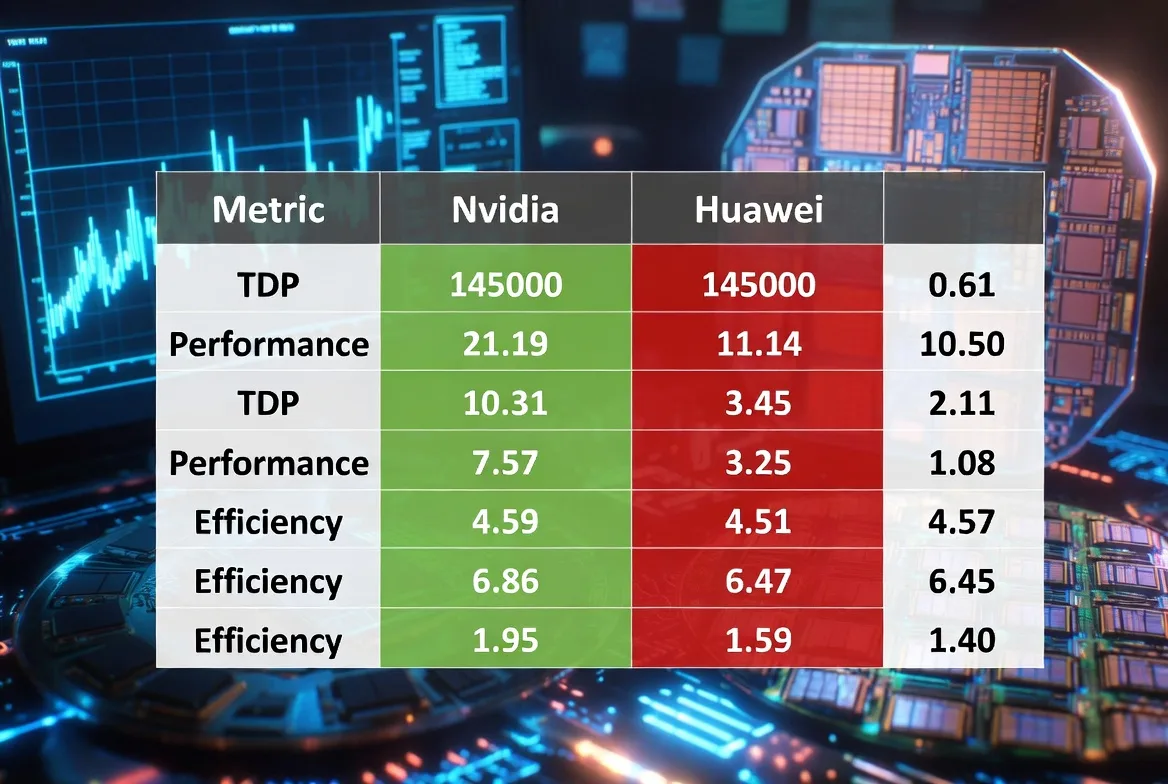
Technical Deep Dive: 
Nvidia’s Advantages:
- Superior architecture and software ecosystem (CUDA remains the industry standard).
- Higher performance per chip, especially in training large models.
- Mature supply chain and scalability.
Huawei’s Strengths:
- Optimized for local deployment at scale.
- Rapid iteration cycles supported by government backing.
- Integration with China-specific AI frameworks.
Experts note that while Huawei chips lag in raw FLOPS for the absolute largest models, they suffice for many practical applications, especially when deployed in massive clusters. Production capacity remains a bottleneck for China, but investments are closing gaps incrementally.
Investor Reactions and Stock Market Impact
Nvidia shares have shown resilience post-earnings, reflecting investor belief in the company’s diversified growth story. However, ongoing China uncertainties contribute to volatility. Long-term holders point to Nvidia’s history of innovation and market leadership as reasons for optimism.
Huawei, as a private entity, doesn’t trade publicly, but its success bolsters confidence in Chinese tech stocks and the broader “de-risking” narrative.
Broader Market Opportunities
- Alternative Suppliers: Companies like AMD, Intel, and emerging players may find niches.
- Software and Tools: Demand for compatible frameworks and optimization tools surges.
- New Geographies: Southeast Asia, India, and Middle East markets offer expansion potential.
Future Outlook: Will Nvidia Reclaim Ground in China?
Short-term prospects for Nvidia’s advanced chips in China appear limited. However, policy shifts—under different administrations or through negotiations—could open doors for compliant products. Huang’s comments suggest a pragmatic acceptance rather than permanent abandonment.
Huawei’s trajectory depends on overcoming fabrication challenges. If SMIC and partners achieve breakthroughs in 5nm or better processes, the competitive landscape could intensify globally.
Strategic Recommendations for Businesses
- Diversify Supply Chains: Avoid over-reliance on single regions or vendors.
- Invest in AI Software: Performance optimizations can maximize existing hardware.
- Monitor Policy Changes: Geopolitical developments will continue influencing availability.
- Explore Hybrid Approaches: Combining best-in-class global chips with local solutions where feasible.
The Human and Societal Dimensions of the AI Chip War
Beyond balance sheets and market shares, this rivalry influences job creation, research priorities, and global AI ethics. Accelerated innovation benefits humanity through faster advancements in drug discovery, climate modeling, and scientific breakthroughs. Yet, it also raises questions about dual-use technologies and international cooperation.
Nvidia’s ecosystem has trained millions of developers worldwide. Huawei’s push fosters talent and infrastructure within China, potentially creating parallel innovation hubs.
A New Era in Global AI Semiconductor Competition
Nvidia’s admission of largely conceding China’s AI chip market to Huawei represents a significant chapter in the ongoing tech decoupling saga. Yet, it does not signal defeat. Instead, it reflects strategic adaptation in a complex geopolitical environment.
With its record revenues, relentless innovation, and global reach, Nvidia continues to thrive. Huawei’s ascent strengthens China’s technological base but faces hurdles in matching worldwide leadership. The ultimate winners will be those who best navigate restrictions, invest wisely, and deliver value to customers.
As AI transforms every sector, the competition between giants like Nvidia and Huawei will drive unprecedented progress. Stakeholders must stay informed, agile, and forward-looking. The AI chip market’s evolution promises exciting developments, with profound implications for economies, societies, and the future of intelligence itself.
Discover more from Tech-Brunch
Subscribe to get the latest posts sent to your email.


